

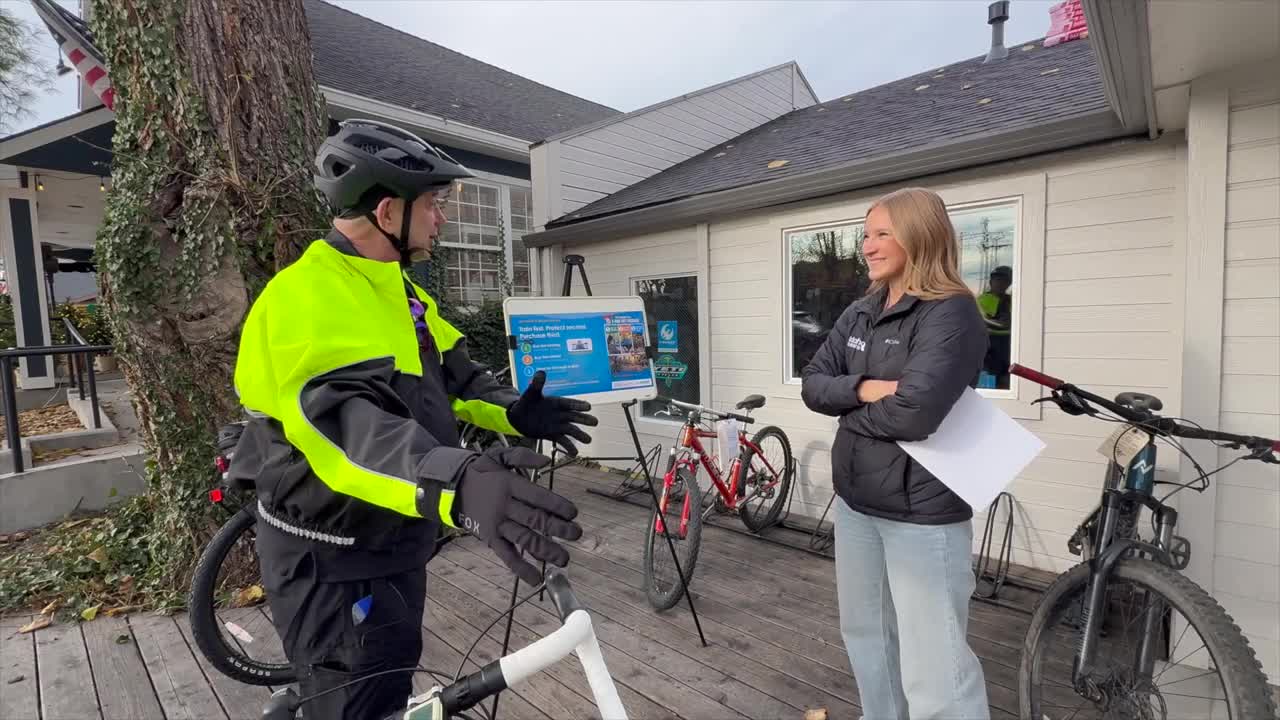


EAGLE, Idaho — With Black Friday and the holiday shopping season approaching, local cycling educators and bike shop owners are encouraging parents to look beyond price tags before purchasing an e-bike for their child.
According to Clint Sandusky, an Eagle neighbor, retired law enforcement officer and former police bike patrol instructor, families should approach an e-bike purchase the same way they would any other vehicle that can travel at higher speeds and interact with traffic.
WATCH: Local experts share e-bike safety tips ahead of holiday shopping
RELATED | Eagle neighbors and police host E-Bike 101 safety session in Avimor
Sandusky said many of the issues being discussed locally and across the country stem from confusion between legal e-bikes and high-powered electric motorcycles.
"Parents wouldn't just hand over their car keys to their teen who's 16, old enough to drive without education first," he said.
Sandusky said some parents are unknowingly purchasing electric motorcycles after hearing requests from their children or seeing products marketed online alongside e-bikes.
"Their child comes to them and says, 'Hey, you know, all my friends have a Surron,'" Sandusky said. "A Surron is an electric motorcycle. It's not an e-bike, and they buy it for them and bad things happen."
As part of his work with the American Bicycling Education Association and its Cycling Savvy program, Sandusky said the organization is encouraging families to think about what he calls the complete e-bike gift package.
He recommends that parents focus on training before purchasing a bike, make sure riders have proper protective equipment and then select an e-bike that complies with state law.
Sandusky said legal e-bikes must have operable pedals, be limited by specific speed classifications and use motors that meet legal requirements.
He noted that Class 1 and Class 2 e-bikes are limited to 20 mph, while Class 3 e-bikes can provide assistance up to 28 mph.
He also pointed to growing discussions among Idaho lawmakers regarding high-powered electric motorcycles and thanked Idaho State Sen. Brian Lenney and Rep. Ted Hill Green for working on legislation addressing e-motos ahead of a future legislative session.
RELATED | Star among Treasure Valley communities responding to proposed e-moto regulations
He also expressed appreciation for local law enforcement agencies that have focused on educating riders and families before turning to enforcement.
Sandusky specifically thanked Eagle police leadership, including Deputy Jeff Hazer and Sgt. Justin Elliott, for their efforts to help the community better understand the difference between legal e-bikes and electric motorcycles.
"I wanted to reach out and thank them as well," Sandusky said. "What they're doing from an educational standpoint and also an enforcement standpoint."
RELATED | Eagle police deputy patrols Greenbelt on two wheels as city considers a new e-bike ordinance
Sandusky said parents should educate themselves before making a purchase because they are often the people making the final decision about what their child rides.
"I do strongly believe that parents are the ultimate line of defense in their teens' safety," Sandusky said.
He also encouraged families to consider formal training opportunities. Cycling Savvy offers online resources and courses for both teens and adults.
Sandusky said the organization hopes to offer additional hands-on training opportunities in the future. More information can be found by clicking here. The teen-specific training course is available by clicking here.
"Better riders today. Better drivers tomorrow," Sandusky said.
At Reed Cycle in Eagle, manager Daniel Reed said the growth of e-bikes has also brought an increase in customers asking questions about products purchased online.
Reed said one of the most important factors parents should consider is whether a bike can be serviced after it is purchased. He recommends buying from a reputable local bike shop whenever possible because staff can help customers navigate repairs, maintenance, diagnostics and warranty issues.
"If they can buy it through a shop, whether it's our shop, another local shop, that's key," Reed said.
According to Reed, many bike shops have specialized tools and software designed for specific e-bike systems, making repairs difficult or impossible for some lower-cost products purchased online.
"That would probably be the first thing I'll tell people is you might spend 1000 bucks online, but most shops will just look at it and say, 'I can't fix it,'" Reed said.
Safety concerns are another reason Reed's shop has become more selective about the products it services. He pointed to concerns involving braking systems, battery quality and the growing number of inexpensive e-bikes entering the market.
"A $600 e-bike is not a proper e-bike, honestly. They're just dangerous braking systems," Reed said. "They're not putting proper brakes on these e-bikes that are, again, $600 to $1000."
Reed added that confusion between legal e-bikes and electric motorcycles has also complicated public perceptions of the industry.
"The e-motors have really clouded what e-bicycles really are," he said.
Both Sandusky and Reed said families considering an e-bike this holiday season should take time to understand what they're buying, where they'll receive support after the purchase, and the training and safety responsibilities that come with ownership.
