



EAGLE, Idaho — The future of the historic Orville Jackson House took another step forward Tuesday night as the Eagle City Council approved the next step in transferring the property to the Eagle Urban Renewal Agency (EURA).
The vote follows months of discussion about the future of the property. Earlier this year, the council voted to move forward with selling the home rather than continuing city ownership. At the time, council members cited the cost of maintaining the property while also discussing ways to preserve its historic character.
RELATED | Eagle City Council votes to sell the historic Orville Jackson House
As Idaho News 6 previously reported, the Orville Jackson House is one of seven properties in Eagle listed on the National Register of Historic Places.
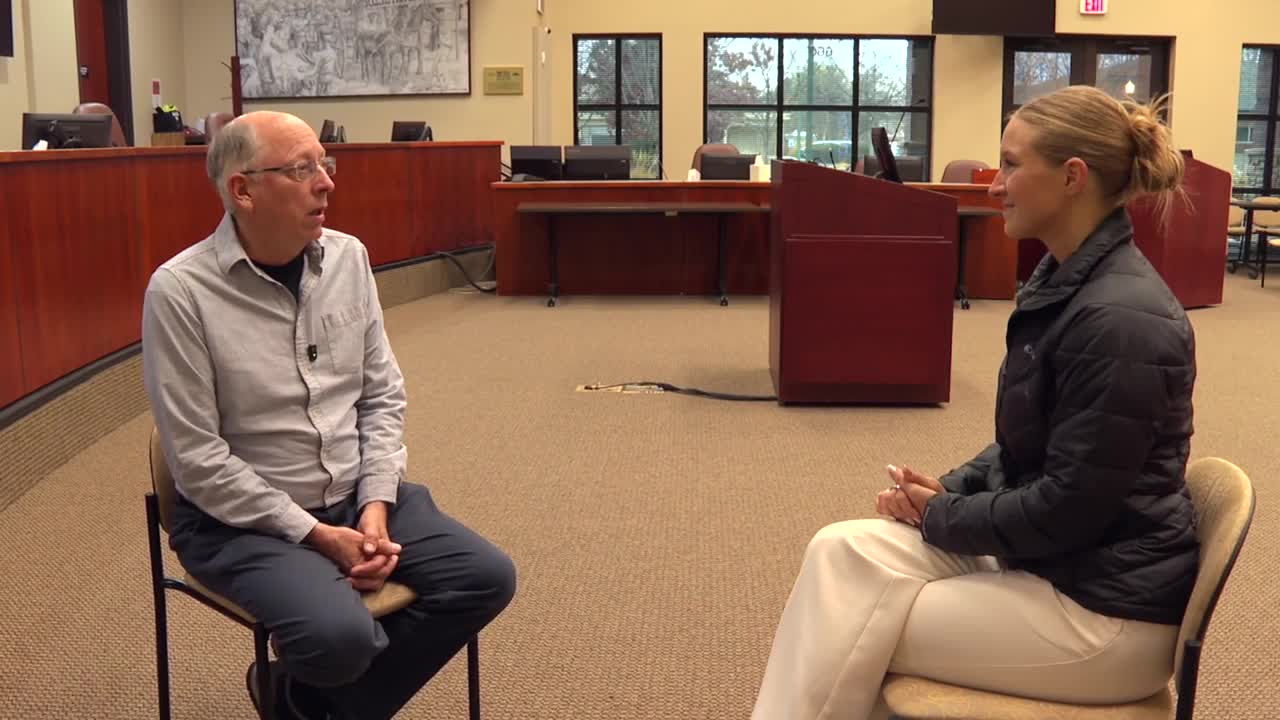
For EURA Chairman Mark Butler, the discussion is more than a development issue.
Butler said he met Orville Jackson's daughter, Shari Sharp, shortly after moving to Eagle and beginning work for the city.
"She's the one who lived in the home when it was purchased by the city," Butler said.
The relationship continued long after that first meeting.
"I've known her for 30 years. I still go visit her. She's in a home nearby," Butler said. "Very, very closely connected with her and obviously then have just emotional ties to the house and the history and all that."
For Butler, the home represents one of the few remaining physical connections to Eagle's past.
"That home is still here and still stands for our history," he said.
He later added: "They've left a legacy, a physical legacy her father did, and that's one of the few that are remaining."
WATCH: Historic Orville Jackson House enters next chapter as transfer process moves forward
Butler said he began considering EURA's involvement after watching council discussions about selling the property.
"I was thinking, I need to bring this to the board, the Urban Renewal Agency board, and see if they're interested in buying it, because in my mind, it would be better for the agency to own it and then work with developers versus the city would have had to sold it by, sold it by auction, and any developer could have gotten it, and who knows what they would have done with it," he said.
According to Butler, the agency board agreed to pursue the idea, leading to discussions between EURA and the city.
"I approached the board as chairman, and they agreed," Butler said. "Then we had joint meetings with the city, workshops and so forth, and finally worked into a purchase and sales agreement."
One of the biggest questions raised throughout the process has been what protections would remain in place once the property changes hands.
Butler said EURA plans to add additional conditions beyond the existing restrictions that already prevent the home from being moved or demolished.
Among those conditions is preserving the home's visibility from Eagle Road.
"As you're driving on Eagle Road, no buildings or even landscaping, trees and stuff additional to be built along that to block the view from Eagle Road," Butler said.
He said the agency also wants to protect the home's exterior appearance.
"Conditions to preserve the facade, and not be, you know, removing facade materials and replacing them with hardy plank or some sort of new modern material."
Butler repeatedly returned to what he sees as the agency's primary objective.
"That's the goal is preservation, preservation, preservation," he said.
At the same time, Butler acknowledged development is expected to occur on portions of the property behind the house.
"Yes, development will occur."
That development would not be located between Eagle Road and the home, he said.
"From the view perspective from Eagle Road, no development between that house and the road."
Potential future uses could include parking, residential development, or other projects proposed through a public process.
The agency has already begun seeking ideas.
"We've put out requests for proposals," Butler added.
According to Butler, multiple parties have already expressed interest, and he said proposals are due Jan. 6 before the agency begins reviewing options.
"The agency, Eagle Urban Real Agency, has a committee that will look those over, and then we'll go through a vetting process and pick somebody."
Butler emphasized that any actual construction remains well into the future.
"You're not going to see a groundbreaking for probably a year and a half, something like that, maybe longer."
While Councilman Robert Gillis voted against Tuesday's transfer action, he told Idaho News 6 that his concerns are not about preserving the home itself.
In fact, Gillis said he continues to support selling the property and getting it off the city's books.
"It makes sense to sell it," Gillis said.
He also pointed to the restrictions already attached to the property.
"There's so many deed restrictions on it, and it's already been deemed a historical landmark," he said. "So it's not like somebody could come in and flatten it, put it in apartment buildings."
His concerns focus on what could happen around the property, particularly discussions involving the extension of Olde Park Place Road and potential future development behind the home.
"I still want to have the house sold, but not with those conditions put on it," he said.
Gillis said he's worried additional roads could worsen traffic patterns in downtown Eagle.
"We got to look at it long term. We're making so many small streets that we're almost creating more traffic," he said. "People are making a right turn, having to stop again, another right turn or a left turn; they got to stop again. It doesn't flow. And for me to put another road in there to come out on the plaza, to take part of the parking lot away, which is gonna impact the pharmacy drive-through at Walgreens, I just don't agree with it."
He also pointed to concerns involving potential impacts on nearby properties.
"The potential is there to have to declare eminent domain over part of the parking lot, and also, there's also potential for commercial getting built back there on Old Park Place. For those reasons, I can't support it," Gillis said.
Even with those concerns, Gillis said he believes the home itself should continue to be protected.
"No, I just think it's important to the history of the city to maintain it as best as it can be maintained, but the city shouldn't have to necessarily be the ones to do it. Urban renewal is a perfect place for it," he said.
For now, both Butler and Gillis agree on one point: the historic home should remain part of Eagle's future.
The next major milestone will come in January, when EURA begins reviewing proposals submitted for the property.
As that process unfolds, Butler said the agency's focus remains unchanged.
"For the people's perspective who want that house maintained, it will be maintained and kept," Butler said. "That is our agency's main goal: not to make money off of development; it's to preserve that house."
