

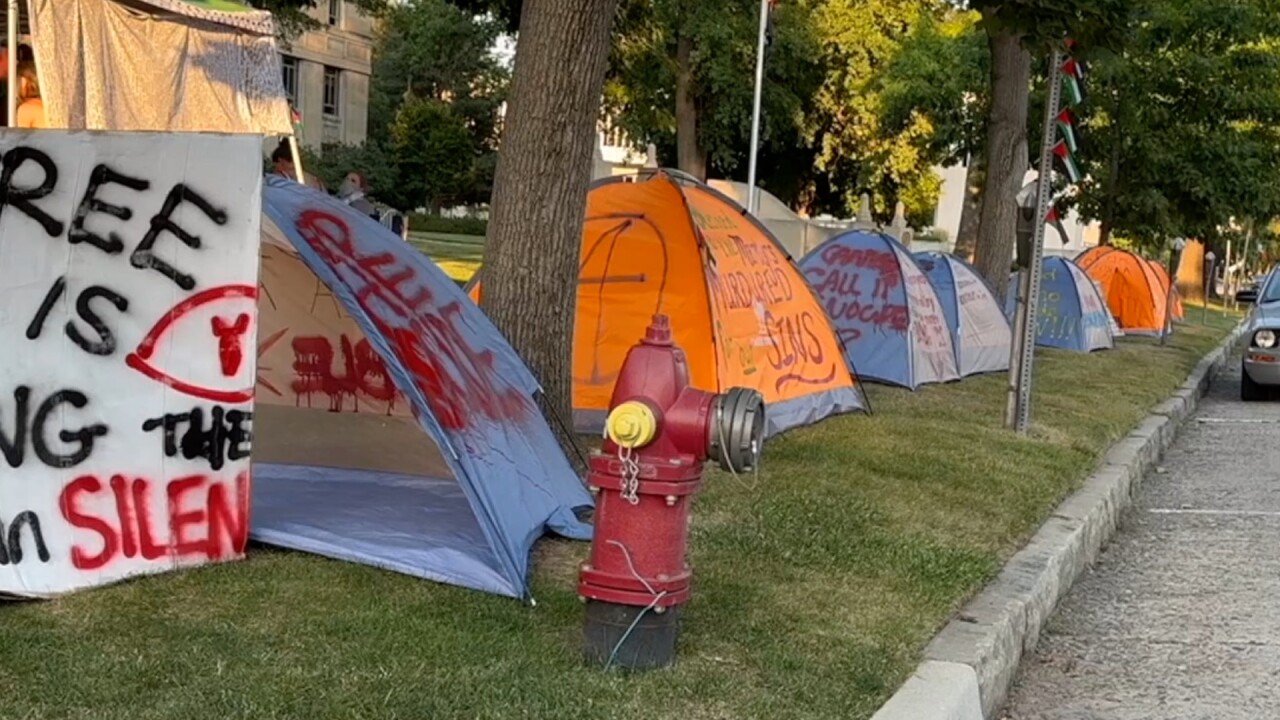


BOISE, Idaho — A bill that would set new limits on camping at the Idaho Capitol has passed both chambers of the Legislature and is now headed to Gov. Brad Little’s desk for final approval.
House Bill 603 comes after protests in 2024, when demonstrators set up an encampment on the Capitol lawn during pro-Palestine demonstrations. The situation led to a legal challenge over the limits of protest activity on state property.
WATCH: New limits on camping at Idaho Capitol advance to governor
A federal judge at the time allowed tents to remain as a form of symbolic speech, as long as they were not used for overnight camping.
Lawmakers say the new bill is intended to clarify those boundaries.
The legislation defines what qualifies as camping on state property, including activities such as sleeping, storing personal belongings or cooking. It would require all tents – including those used symbolically – to be removed overnight between 9 p.m. and 6 a.m. Violations would be treated as an infraction.
The bill also requires that personal property left behind be stored for at least 90 days before it can be disposed of.
Supporters say the measure establishes clear expectations for how public space can be used.
“This body has a duty to ensure that the Idaho State Capitol remains a welcoming, safe, and functional place,” Sen. Adams said during floor debate.
Some lawmakers pointed to issues they say occurred during the 2024 protests.
RELATED | Boise to Palestine protesters moved off Capitol steps, some claim forcefully
“There was damage… legislators being harassed… people using bathrooms…” Sen. Nichols said.
Others, however, raised concerns about potential impacts on free speech.
“This is a people's house, and I think the people ought to be able to exercise their free speech in whatever manner they want as long as they're not harming or threatening other people,” Sen. Hart said.
Supporters of the bill argue that it does not restrict speech itself.
“We are not regulating what is being said,” Adams said.
The Senate passed the bill in a 28-6 vote, sending it to the governor’s desk.
