

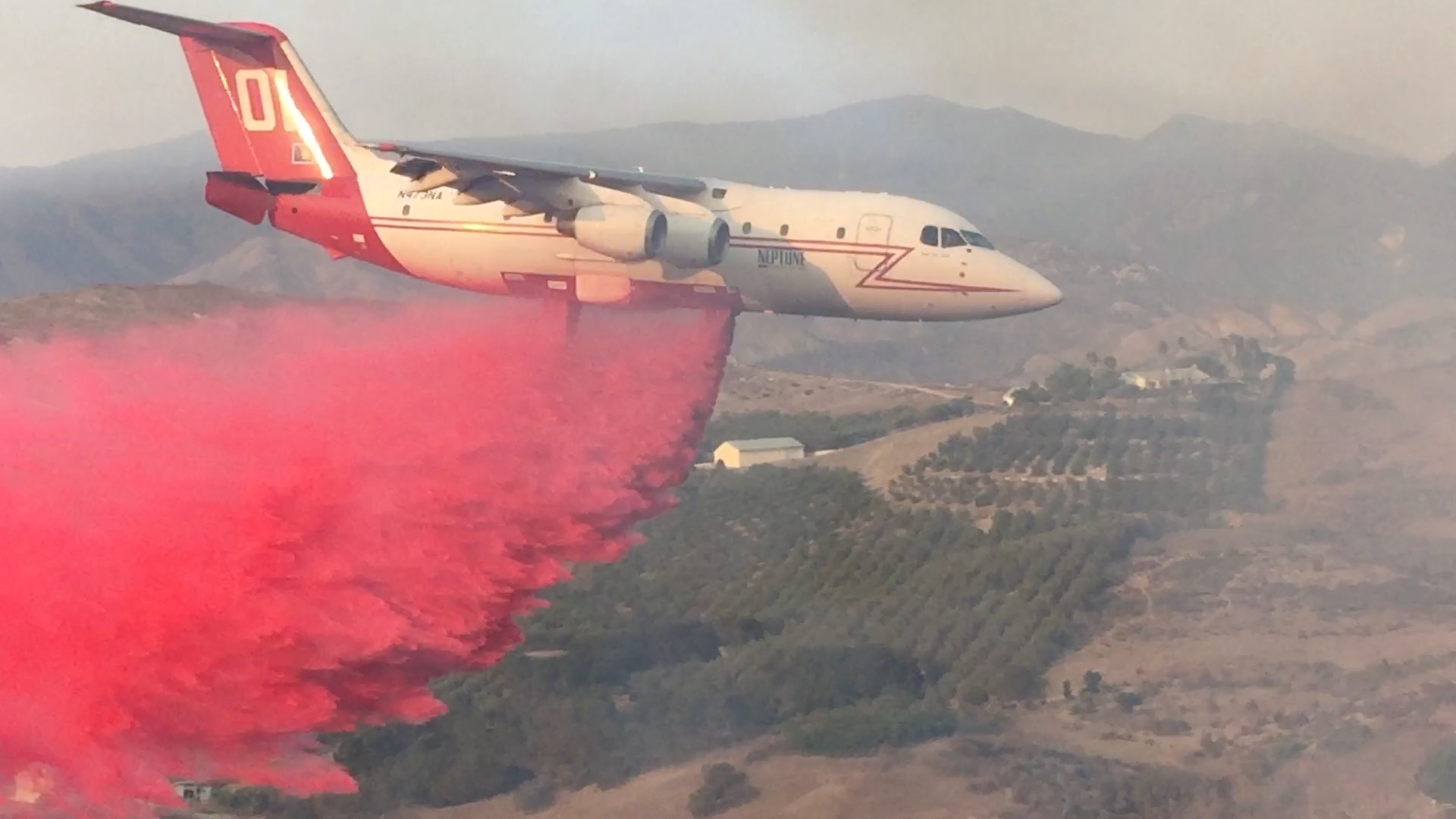


BOISE, Idaho — Idahoans are no strangers to wildfires, and air resources like planes and helicopters continue to play a huge role in fighting them.
Aerial firefighting companies from all around the world gathered at JUMP in Boise to discuss innovations in the industry.
“We’ve been fighting fires the same way for 40-50 years, and fires have gotten worse faster than we’ve been able to use technology to try and fight them more efficiently and more effectively," Todd O’Hara with TracPlus said.
TracPlus is a New Zealand-based company that tracks and manages about 3,500 aircraft around the world, gathering flight data plus information like how many gallons of retardant a plane drops and where.
WATCH: Hear how the aerial firefighting world is changing
“Each of these drops or each of these dots here is an actual suppressant activity that’s taken place, and so each individual aircraft has a color," O'Hara said. "You can see a lot of the air attack ones. If we zoom out, you can see where they’re coming from and the work that they’re doing."
He said the company is working on new ways to use all that data to improve wildfire response from the air.
“We’re trying to figure out a way that’s a mathematical model that’s repeatable that enables people to make the same decisions regardless if they’ve been in the business for 20-30 years or if they’re just coming through fresh," O'Hara said.
I checked out the flight data from the Claremont Fire in Boise this summer and tracked the planes seen from the ground dropping the well-known bright red retardant.
“One of the innovations lately is changing in the color from a very, what you used to see for many years kind of a dark red, to more of a pink color now, a fuchsia color that is easier to see from the air and the ground, and it goes away much quicker," Jim Karels with Perimeter Solutions said.
He explained that the folks at Perimeter Solutions are working on updating and changing their retardant formulas to better work with air tankers like the ones from Neptune Aviation.
“For Neptune, we are in the process of developing a new large air tanker. It will carry about 50% more than our current 146 does, so 4500 gallons," Nic Lynn with Neptune Aviation said.
Lynn said the company dropped 606,000 gallons of retardant in Idaho this year. Its newest project is turning an Airbus A319 into a firefighting plane.
“So that higher capacity means in fewer trips, we can put more retardant and build longer lines around the fire, so we’re just more efficient," Lynn said.
Check out some of Neighborhood Reporter Brady Caskey's other stories highlighting the world of wildland firefighting below:
Largest-ever U.S. deployment of Australian, New Zealand firefighters arrive in Boise
The Pulaski: The Idaho‑born firefighting tool that has stood the test of time
"We won't insure you": Robie Creek homeowners struggle to get home insurance due to wildfire risks
Grazing goats help homeowners reduce wildfire risks — one bite at a time
