

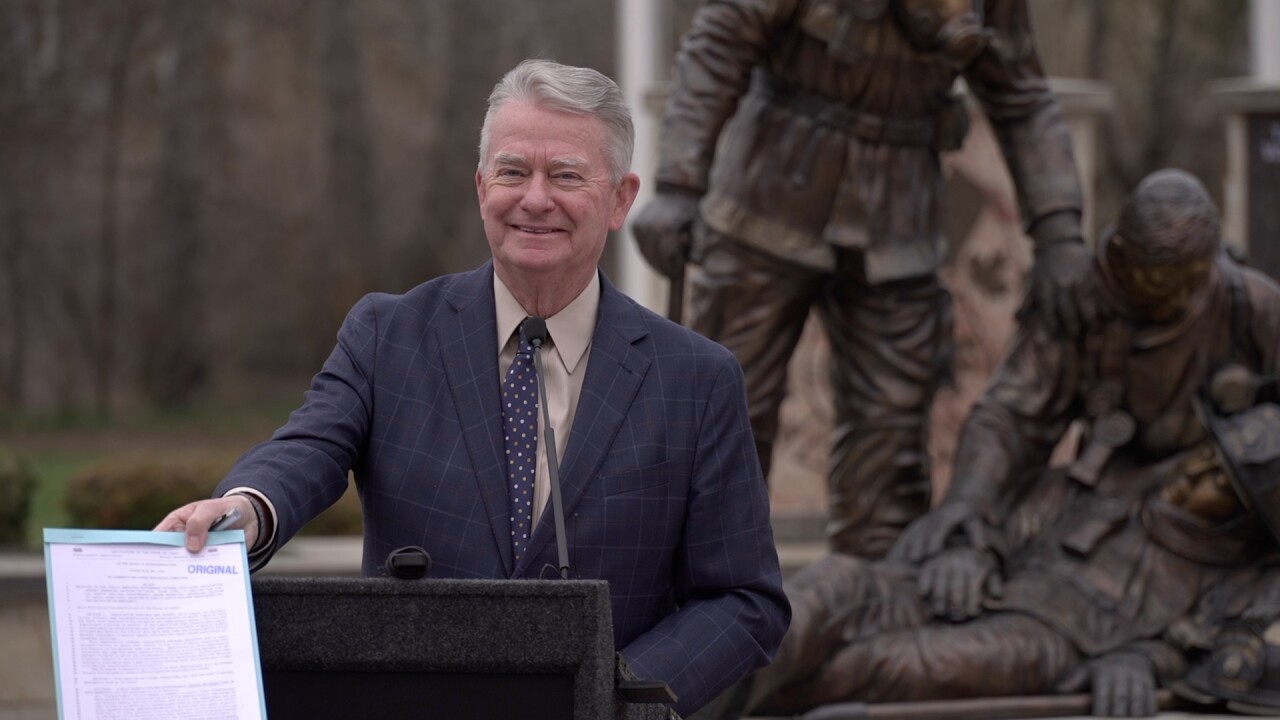


BOISE, Idaho — New and expanded benefits for the families of fallen first responders in Idaho are now law. Gov. Brad Little signed House Bill 642 during a ceremonial signing at the Idaho Fallen Firefighter Memorial in Boise.
"There we go. It's law now— or will be on July 1st," said Little during the ceremony.
WATCH How a new Idaho law helps the families of fallen first responders
The bill updates Idaho’s public safety pension system, creating more consistent catastrophic benefits for public safety officers killed or severely injured in the line of duty.
The bill defines catastrophic injury as severe, externally caused harm — such as paralysis, total loss of sight or hearing, traumatic brain injury or severe limb loss — that occurs while performing official duties. Officers or their families will now be eligible for a lump-sum payment of $500,000, along with an annual benefit of at least $75,000, adjusted every four years based on actuarial studies. If there is no surviving spouse, dependent children will share the lump-sum benefit equally.
Supporters say the need became clear after the ambush killings of firefighters in North Idaho last summer exposed inconsistencies in survivor benefits.
RELATED | Idaho firefighters unite to support Coeur d'Alene colleagues following tragedy
I sat down with Nampa firefighter Matt Smith, who helped work on the bill through his role as vice president of the Professional Firefighters of Idaho, to learn how this new law will help first responder families.
"So what we did with this legislation was we added death to our catastrophic injury benefit, and the other place in code that addressed death, we kind of melted those two into one piece of legislation," Smith said.
The bill is retroactive to 2021. Smith says before this change, surviving spouses received a lump sum death benefit, while the ongoing pension was calculated as if that officer had retired the day before they were killed.
"And what we saw out of one of our spouses in North Idaho, it was fractions of what it should have been. Had he continued to work the remaining nine or so years of his career, it would have been eight times more than she was going to receive, and we didn't feel that was fair," Smith said.
This story was reported on-air by a journalist and has been converted to this platform with the assistance of AI. Our editorial team verifies all reporting on all platforms for fairness and accuracy.
