

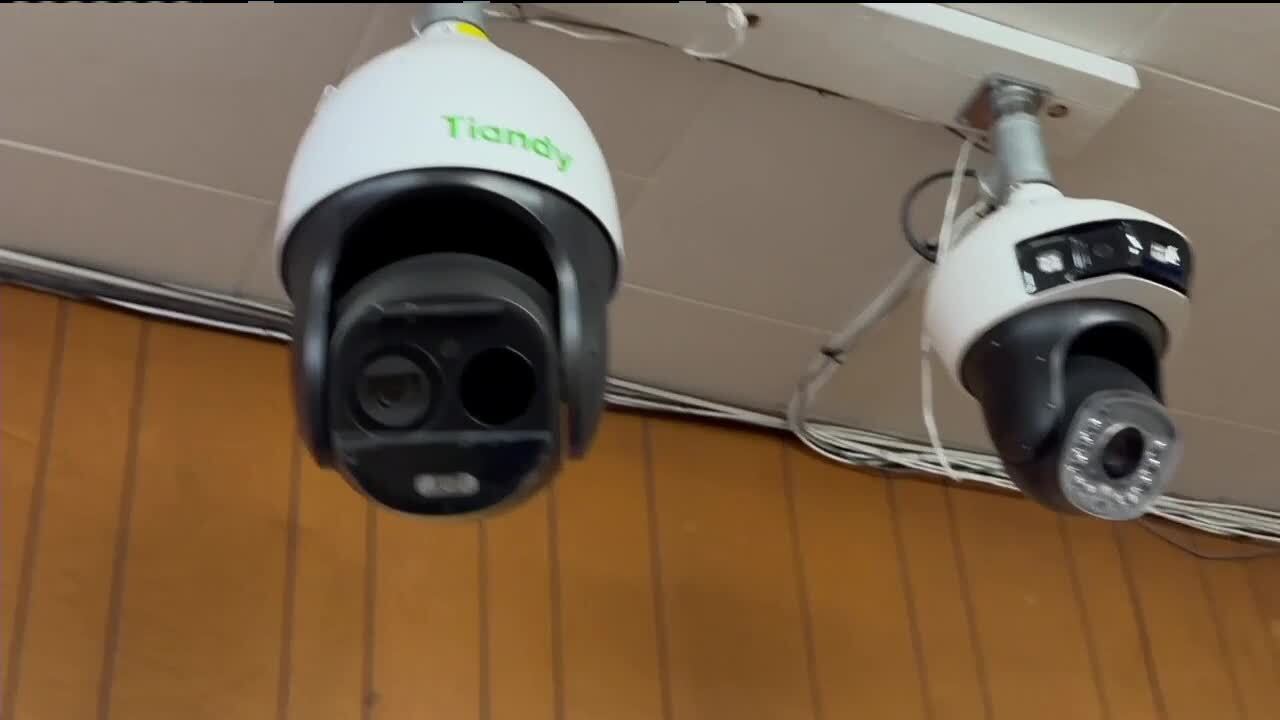


NAMPA — The abduction of a journalist’s mother has sparked renewed debate about who controls the video captured by home security cameras.
Clear doorbell footage of the suspected kidnapper helped investigators, highlighting the value of residential surveillance systems. But the case also raised concerns after the camera appeared to record and transmit footage online even without a paid subscription.
Hear what a private investigator recommends when choosing a home security system —
"It looks like everything is being recorded. Oh, everything is, somewhere out there," said Matthew Schultz, a private investigator trained in electronic tracking by the Marines.
Schultz said homeowners who rely on cloud storage often give companies significant control over their footage.
"The cloud service that's being provided to you, they own it on the aspect that they store it," Schultz said.
Cloud services not only retain customer video but also charge monthly storage fees.
Alan Hochstrasser Jr., owner of A-Gem Supply in Caldwell, said most major doorbell camera companies disclose in their terms that they retain and store customer video.
“Most major doorbell camera companies in the world are very clear that they keep the video. They store the video,” Hochstrasser said.
His family’s parts and electronics business has operated for 65 years. In the 1980s, security cameras accounted for about 10% of sales. Today, they make up roughly 70%.
According to Grand View Research, home security cameras constitute a $15 to $17 billion industry that continues growing rapidly.
Privacy concerns highlighted by cases like this are driving more consumers toward closed-circuit systems that they control completely.
"The unit is yours and so the hard drive that stores the images and videos in that scenario, you have access to, nobody else should," Hochstrasser said.
"A lot of people stepped into it by being a Ring camera then they find out what they've agreed to, that they're paying for how much of that is available to whom, and they say I want something that I maintain," he said.
A basic two-camera setup with decent encryption costs as little as $200 and allows recording weeks or months of video on a personally owned server.
Regardless of choosing cloud or closed-circuit systems, Hochstrasser believes home security cameras provide real benefits.
"If your house is protected with cameras and it doesn't look just like a mail order sticker camera that you plugged in with a cord, you're less likely to be burglarized than the guy next door who looks like an easier target," he said.
However, Schultz warns that cloud services may compromise something more valuable than physical belongings.
"Honestly, I think the American citizens should be very worried," Schultz said when asked about surveillance concerns.
