

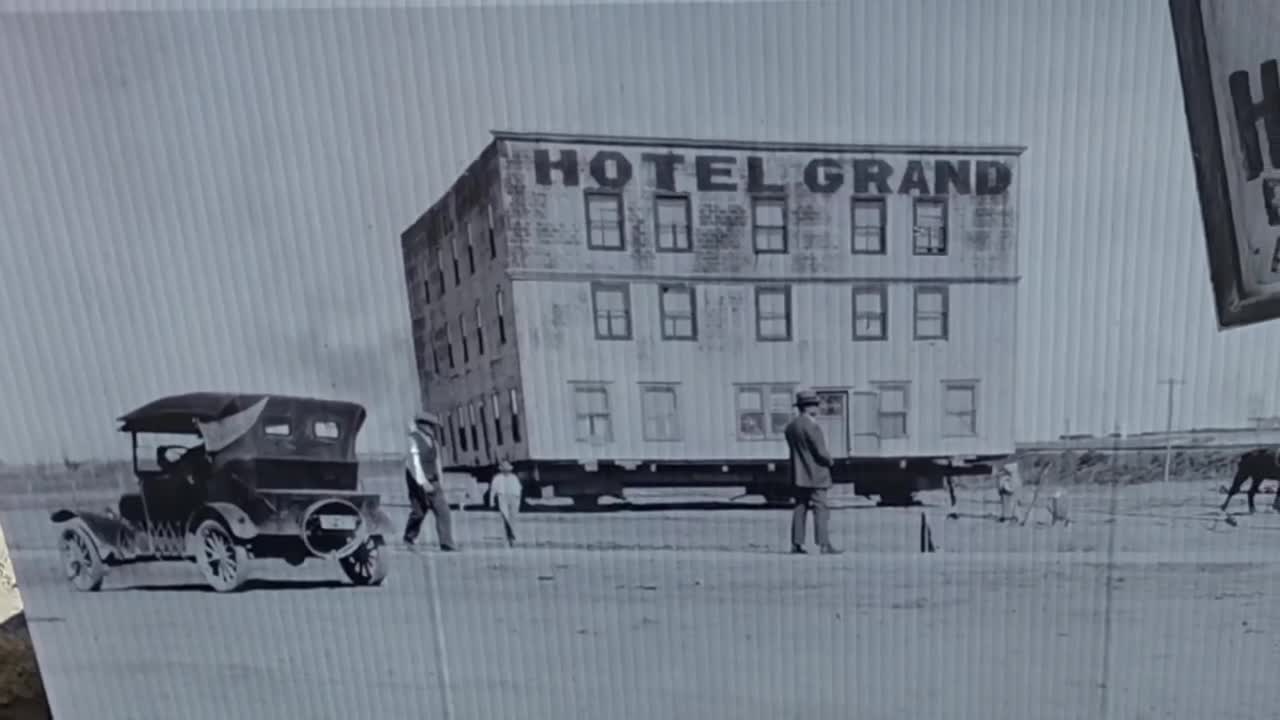


AMERICAN FALLS, Idaho — Low water levels at American Falls Reservoir are providing a rare look at a piece of Idaho history, giving visitors the chance to walk through the foundations of a community that moved an entire town uphill nearly a century ago.
WATCH MORE: Low water at American Falls Reservoir reveals the original townsite where visitors can explore foundations from the 1920s
"We're in American Falls — not the American Falls that most people know — but the original American Falls," Celia Klassen, a local Power County historian, said.
American Falls dates back to the 1880s as a bustling agricultural community along the river. Between 1925 and 1926, the construction of the American Falls Dam forced the entire town to move uphill.
The relocation included roughly 340 homes, 46 businesses, three hotels, five churches, a school, an auditorium and a hospital. The Bureau of Reclamation compensated landowners for their property, but for the most part, residents were responsible for moving their buildings.
"They did it in really interesting ways. It was right at that time between vehicles and horses and carts still," Klassen said. "People went and salvaged steam tractors and they just lifted them up. If they were brick, they took all the bricks off, piled them up, moved the building and put all the brick back on."
Unlike many communities lost to dam construction in the West, the original American Falls townsite continues to reappear when water levels lower. Visitors can walk among the foundations for themselves.
"This was the Oneida elevator. People would have driven their grain carts right under there," Klassen said.
For lifelong Idahoans like Kent Rudeen, walking the same ground as previous generations puts the passage of time into perspective.
"I probably imagine my grandfather delivered grain here in the 19-teens," Rudeen said. "And I know for a fact that my dad told me he was born in a house down by the river in 1922."
Now there are plans to make the site more accessible. The Bureau of Reclamation is planning a new access road.
Supporters hope it will help more people experience this piece of Idaho history.
"It will be huge for tourism," Klassen said. "This is a rare thing we have here."
This story was reported on-air by a journalist and has been converted to this platform with the assistance of AI. Our editorial team verifies all reporting on all platforms for fairness and accuracy.

