

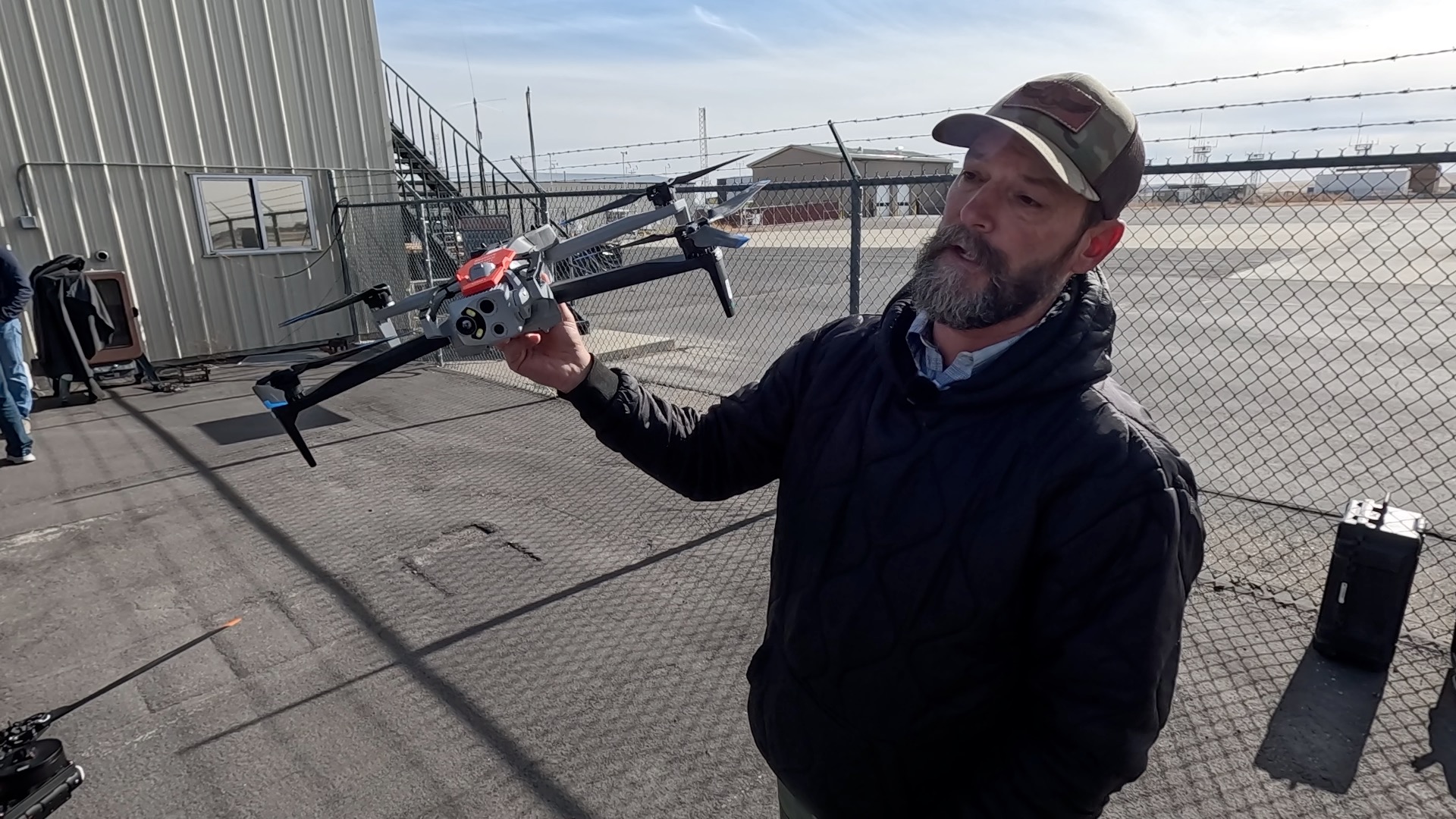



SOUTH BOISE, Idaho — Wildfires can be fast-moving and dangerous for crews on the ground, but now drones are giving firefighters a powerful tool from above.
At the National Interagency Fire Center in Boise they use specialized drones to give firefighters the most up to date info from the air and even use them to do burn operations.
“Within the department of the interior, the entire department we have probably 600 drones and maybe 500 pilots across about 47 states," said Brad Koeckeritz, Division Chief of Unmanned Aircraft Systems for the USWFS.
Koeckeritz oversees the unmanned aircraft program and says their fleet of drones have a variety of uses on wildfires.
WATCH: See how crews at NIFC are using drones to help fight wildfires
“We use it for a hotspot detection, for mapping, reconnaissance and then we use these systems also for aerial ignition, so we'll use them to actually start backfires and burnouts to reduce the fuel between our control feature and where our main fire is located," said Koeckeritz.
The Freefly Alta X is one of the workhorses for the team and can carry multiple cameras and even an aerial ignition device that fits on the bottom of the drone.
“The ball falls out and lands on the ground and about 30 to 45 seconds later the ball ignites, therefore igniting the ground fuels around it," Steve Stroud is a seasoned drone pilot and one of the Unmanned Aircraft Fleet Managers.
Stroud says they use what are essentially flaming ping pong balls to strategically burn fuels in places that could be dangerous for ground crews to go.
“If we wanted to go burn out an area, traditionally we would have drip torches and you’d have to hike with all the fuel and people and you know climb 2000 vertical feet to the top of the hill," said Stroud.
Now they can do that same job faster and safer.
“I tell them treat it like a hot shot crewmember that can climb at 1000 to 2000 foot per minute and walk around at 45 miles an hour," said Stroud.
The drones are also used for mapping and reconnaissance scouting to make sure crews on the ground have the most up to date information on the fire.
“Safety is a primary concern with all wildland firefighting... It provides that capability when you wouldn’t have the eyes in the sky otherwise so nighttime smoke so thick that you can’t see... so this is also a very good risk mitigation tool, especially at night," added Stroud.
Civilian drones launched by members of the public cause huge problems for fire operations, leading to grounded air support and potentially criminal charges for the pilots. When a fire is burning, keep your drones on the ground.
