

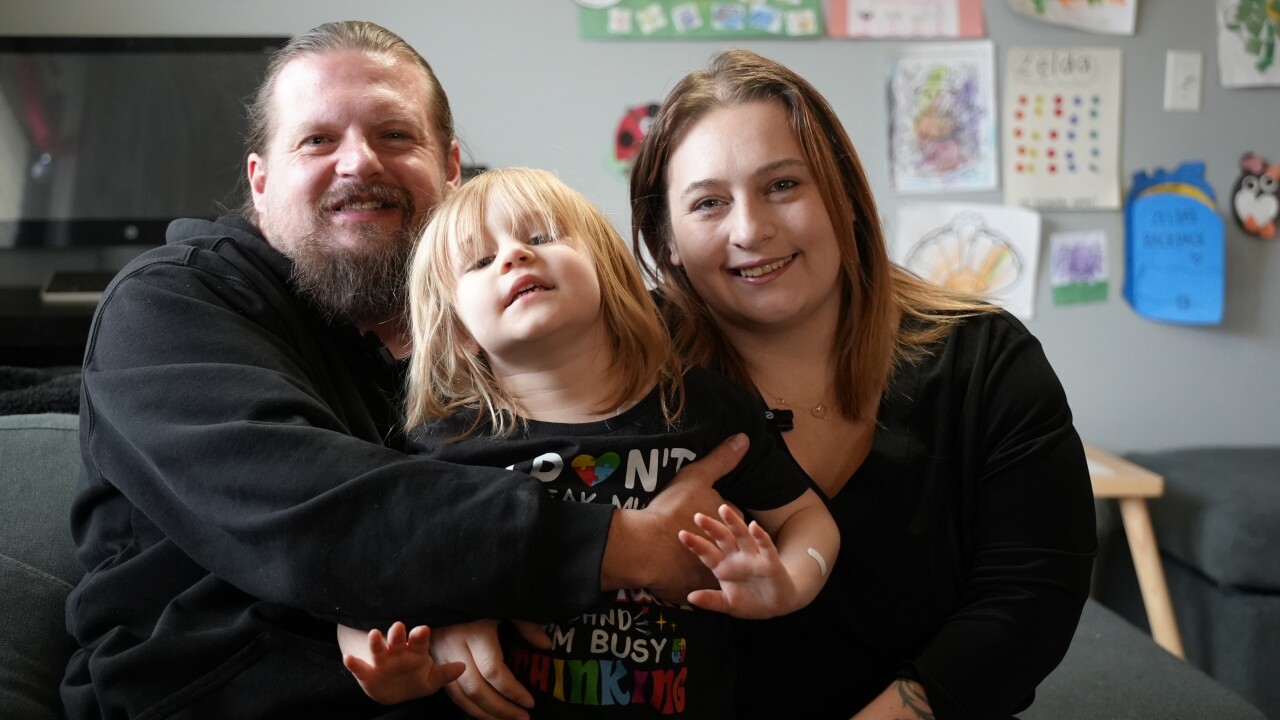


CALDWELL, Idaho — A Caldwell family says recent changes to behavioral therapy coverage for Idahoans on Medicaid are already affecting their young daughter’s progress — and they believe the decision feels discriminatory.
WATCH | Caldwell family speaks out against Medicaid therapy changes for their child with Autism—
Sheana and Scott Hert’s 4-year-old daughter, Zelda, is on the autism spectrum and receives treatment for tuberous sclerosis complex, a rare condition that causes tumors to grow on the brain and heart. The condition also causes seizures, requiring Zelda to take several medications, including chemotherapy.
“It’s a lot for a 4-year-old,” said Sheana Hert. “And one of the few therapies out there that help with that is ABA.”
Zelda is enrolled at Sunderlind Behavioral in Boise, where she was receiving Applied Behavioral Analysis, or ABA therapy — a nationally recognized, goal-oriented program designed to help children with autism develop communication and life skills.
PREVIOUS COVERAGE | Idaho kids with Autism on Medicaid to face 'discriminatory' changes in treatment, providers say
Her parents say the therapy was helping her move toward the possibility of attending school alongside neurotypical children. Before December 1, she was also making noticeable progress, particularly with communication.
“Her need-based speech was a really big win for us when she was doing ABA,” Sheana Hert said.
But last month, Idahoans on Medicaid who previously had ABA therapy covered were switched to what’s known as CHIS therapy. Providers have criticized the Idaho Department of Health and Welfare’s decision, warning it could impact up to 80 percent of the children they serve.
“That was devastating,” Sheana Hert said.
Since the change, the Hert family says they are already seeing regression in their daughter’s behavior and communication.

“So we’re not as cooperative with brushing our teeth. We’ve seen a little bit of aggression in potty training,” said Zelda’s father, Scott Hert.
“Telling us verbally if she was hungry… there’s a lot more yelling and a lot more unknown of what she needs at the time,” added Sheana Hert.
With fewer families able to access ABA therapy, providers at Sunderlind Behavioral say some staff members are anxious about the future of behavioral health care in Idaho and have considered leaving the state.
The Idaho Department of Health and Welfare did not provide an explanation for why Idahoans on Medicaid are no longer covered for ABA therapy. The Hert family says they have also reached out to the department to learn more about the new program but have not received a response.
