

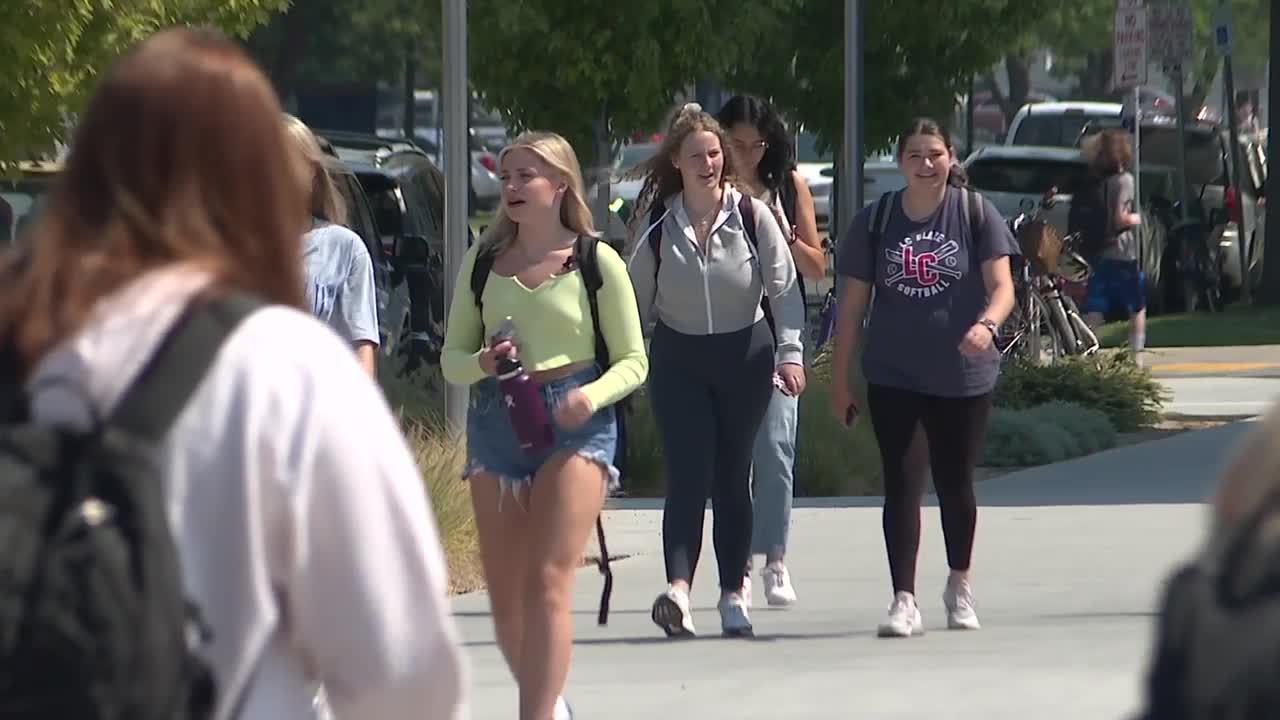


BOISE, Idaho — As lawmakers and technology leaders debate what guardrails artificial intelligence needs, Boise State University students say the technology is already becoming part of how they study, research and complete everyday tasks.
The national debate over AI has intensified as some technology leaders warn that increasingly powerful systems could bring greater risks and call for safeguards around how they are developed and used.
In Washington, lawmakers are weighing what role the federal government should play in setting those rules. President Donald Trump has pushed back against calls to slow AI development, arguing that the United States needs to continue advancing the technology to maintain an edge over China.
At Boise State, students are already making their own decisions about how much they want AI to do for them.
WATCH | Boise State students share how they’re using AI as the national debate grows:
For freshman Rilee Wess, AI can be useful when an assignment isn't quite clicking.
“I use it for, like, vague ideas for, like, my schoolwork and come up with an understanding of some assignments if I'm feeling unsure of what they're exactly looking for,” Wess said.
Wess said AI has become so routine that when she needs to look something up, she will often turn to ChatGPT before Google.
Other students said the important distinction is whether AI is helping someone learn or doing the learning for them.
“There is, like, a big difference from, like, using AI to help you rather than...using AI do it for you,” Boise State freshmen Finley and Cora said.
The students said they have already seen both sides of the technology. One said her high school taught students how to use AI as a tool to assist with their work. The other said she saw students use AI to cheat, but that AI detection tools discouraged some students from doing so.
“I think as long as you're just not overusing it...it has its benefits, but it also has its pros and cons,” one student said.
Those concerns do not end with schoolwork.
Another Boise State student, Ethan, said AI has enriched his life. He uses the technology for repetitive tasks and quick calculations but is also thinking about what could happen as it becomes more powerful.
“I feel like maybe, in the future, it could also be used for crimes,” Ethan said. “Maybe it's pretty new, so I don't know, maybe mass cybersecurity attacks or even just something to that level might be a threat.”
For a technology evolving this quickly, Ethan said part of the challenge is not knowing exactly where it will lead.
“We don't know the outcomes,” he said.
