

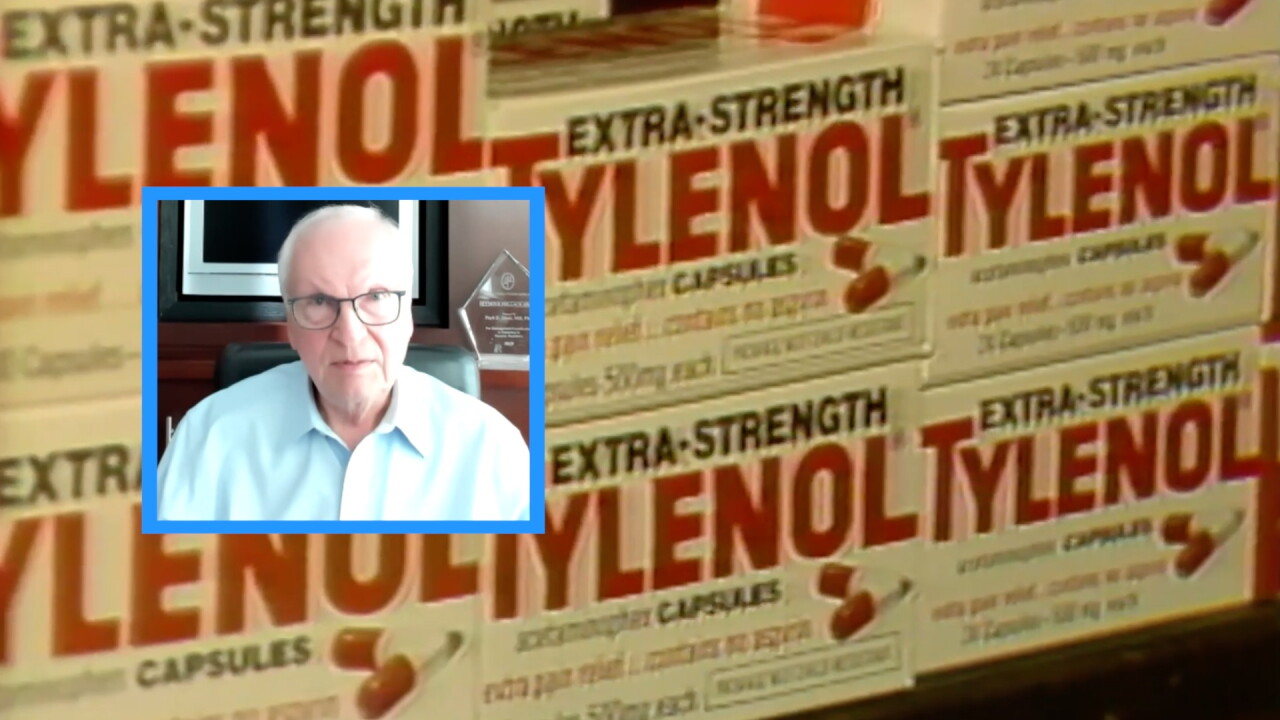


BOISE, Idaho — A forensic psychiatrist who believes Boise’s former “Unknown Wanderer” probably committed the 1982 Tylenol murders is standing by his assessment after a former prosecutor on the original case challenged the theory.
Seven people in the Chicago area died after taking Tylenol capsules contaminated with cyanide. The killings remain unsolved.
Ada County investigators recently identified the Unknown Wanderer, who died by cyanide inside a Boise church in 1982, as Dr. Mathew Betkouski. They raised the possibility that he was connected to the Tylenol murders but stopped short of formally naming him a suspect.
WATCH: Expert stands by possible Idaho link to unsolved Tylenol murders
Dr. Park Dietz, a forensic psychiatrist who consulted with the FBI during the original Tylenol investigation, later reviewed information Ada County investigators gathered about Betkouski. He told Idaho News 6 that as Detective Tim Cooper uncovered more evidence, “it looked to me like he was really onto something.”
Dietz said the strongest part of his argument is that Betkouski had the means to carry out the poisonings. Betkouski was a chemist who, according to Dietz, knew how to make cyanide, had access to it through his work and had talked about using capsules to poison people. Dietz also pointed to personal and professional setbacks Betkouski experienced in the months before the killings.
Jeremy Margolis, a former federal prosecutor who worked on the original Tylenol task force, disputes the connection. He told Idaho News 6 that a behavioral profile does not establish that someone committed a crime. Margolis also pointed to a difference between the sodium cyanide Betkouski used to die by suicide and the potassium cyanide found in the Tylenol capsules.
“It’s the wrong cyanide,” Margolis said. “It’s homemade, contaminated sodium cyanide, not purified laboratory-grade potassium cyanide, which is what the Tylenol killings in Chicago were committed by.”
Dietz disagrees that the distinction rules Betkouski out. “I think that makes no difference at all because Betkouski had access to both,” he said.
Margolis also said three profiles Dietz prepared for the FBI during the original investigation do not resemble Betkouski. Idaho News 6 asked Dietz how those earlier profiles compare with his assessment today and was awaiting a response. In his interview, Dietz said, “My opinion today is that he probably is the one who did it.”
Dietz acknowledged a crucial gap: Investigators have not established whether Betkouski was in the Chicago area when the capsules were contaminated. He said finding evidence of Betkouski’s whereabouts and comparing more evidence from the original case could strengthen or disprove the theory.
