

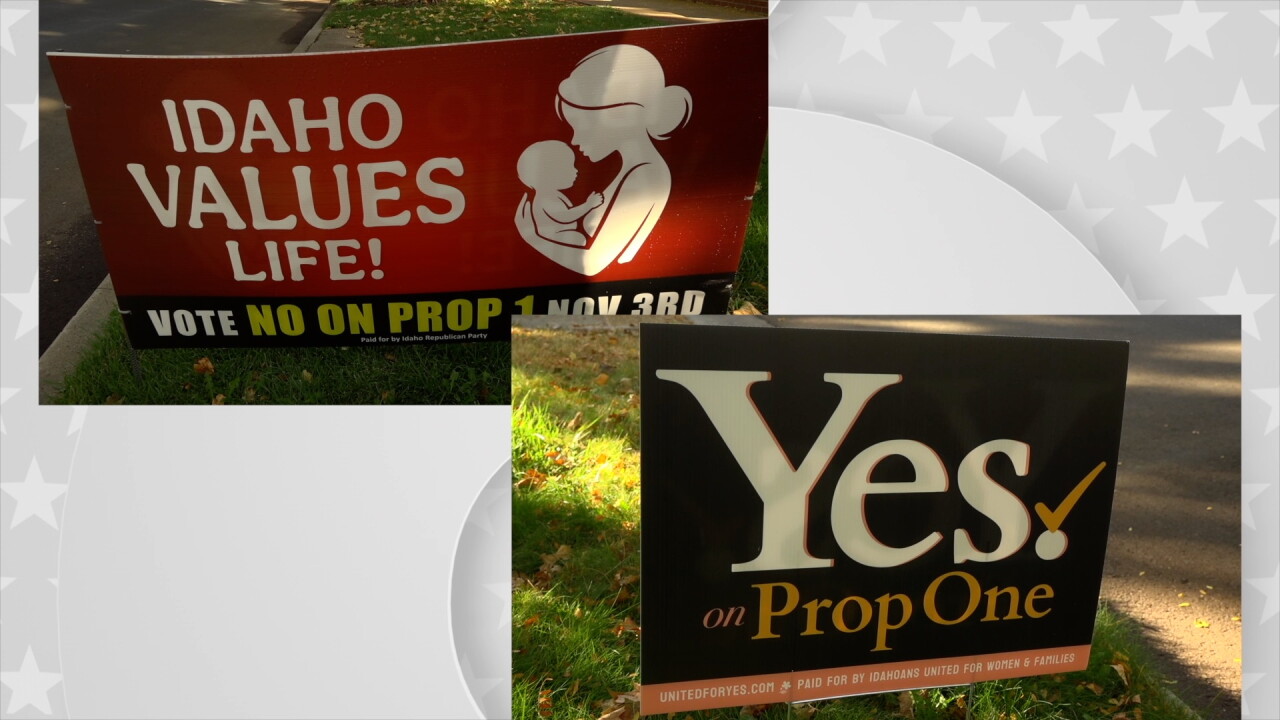


IDAHO — A judge is weighing a request to stop some television advertisements supporting Proposition 1, as opponents allege the groups behind the ads violated Idaho campaign finance laws.
The defendants dispute those allegations. The request remains pending, and the complaint itself is not a finding of wrongdoing.
The lawsuit centers on how advertisements supporting the abortion rights initiative were purchased, who funded them and how the spending was reported.
WATCH: Lawsuit questions rates, disclosures for pro-Proposition 1 ads
Federal law generally entitles legally qualified candidates to a station’s lowest rate for comparable airtime during the 60 days before a general election. Ballot measure campaigns do not automatically qualify for that rate.
“There are federal rules regarding rates in terms of advertising, and that’s part of what really plays into this is candidates get a lower rate,” Idaho Secretary of State Phil McGrane said.
Campaign finance reports attached to the complaint show Idahoans United for Women and Families, the organization leading the campaign supporting Proposition 1, contributed $620,500 to the Idaho Democratic Party.
The lawsuit alleges the party then used Democratic gubernatorial candidate Terri Pickens to purchase advertisements supporting Proposition 1 at candidate rates.
The defendants are Idahoans United for Women and Families, the Idaho Democratic Party and Pickens.
The four plaintiffs are Tom Luna, Blaine Conzatti, Christian Welp and Victor Miller. Luna, Conzatti and Welp serve on the board of Too Extreme for Idaho, a political committee opposing Proposition 1.
The plaintiffs allege their committee faced advertising rates six to 10 times higher at one television station. They argue the lower rates allowed supporter's advertising dollars to buy substantially more airtime.
They also allege the advertisements misidentified their funding source and that the spending was improperly reported. They are asking the court to order the advertisements pulled and campaign finance reports corrected.
The Idaho Democratic Party called the lawsuit “frivolous” and defended its advertising.
“Instead of addressing the harm this ban has caused, opponents are trying to silence the families speaking out, even after the Secretary of State’s Office confirmed our advertising complies with Idaho campaign finance laws,” the party said in a statement. “We won’t be intimidated into silence.”
The Secretary of State’s Office previously said its initial review found no campaign finance reporting violations, but that review was not a full investigation.
McGrane now says his office has an active investigation into a complaint, separate from the lawsuit.
“We do have an active investigation. We received a complaint. So we’re looking at it,” he said.
McGrane said federal advertising regulations and state campaign finance reporting requirements fall under different authorities.
“In terms of the advertising rates, that’s regulated by the Federal Communications Commission at a federal level,” he said. “The reporting of the campaign finances and the money is regulated by us.”
