


EAGLE, Idaho — The Eagle Sewer District is showing off a major step in a $20 million project designed to turn treated wastewater into reusable irrigation water for the Treasure Valley.
District leaders invited the public to tour the facility Tuesday night, showcasing a new filtration system now running as part of the project. The system is brand new and just finishing performance testing.
WATCH | Eagle Sewer District showcases new filtration system in $20 million water reuse project:
Eagle Sewer District treatment manager Brandon Pechin walked visitors through the first phase of the filtration process — an Aqua Aerobics Mega Disc 5-micron filter.
"What we have inside is a 10-ft cloth disk that's made of this material that is 5 microns in size," Pechin said. "This first phase of filtration we'll do is remove large particulates, anything that's 5 microns in size."
To put that in perspective, 5 microns is 1/14 the size of a human hair. Pechin said this is step one of a three-phase process — filtration, polishing and disinfection — needed to reach Class A reuse standards.
Eagle Sewer District general manager Neil Jenkins explained how the filter works using a relatable analogy. Dirty water enters the outside of the filter, passes through a carpet-like material and clean filtered water comes out the other side.
"We're using carpet to collect all of the particulate matter," Jenkins said.
When the carpet gets dirty, a permanently installed vacuum system automatically kicks in to clean it during a backwash cycle — and the water never stops being filtered during that process.
"One of the things we like about this technology is it's understandable," Jenkins said. "We all understand what carpet is. We know how much dirt it collects."
Jenkins said the 5-micron filter removes total suspended solids, particulate phosphorus, organic material, hair and other matter. After that first stage, the water moves to the next step.
"So after the water has been filtered through the 5-micron filter and the bulk of the particulates been removed, next we'll run into a 2-micron filter," Jenkins said.
The 2-micron filters are currently being manufactured and are expected to arrive in the coming months. Jenkins said that stage will remove sand, salt, algae and cryptosporidium — but not all bacteria, colloids or viruses, which is why a third step is needed.
"Next is the ultraviolet disinfection system is going to use UV light and UV light bulbs, and there it's going to inactivate the bacteria, viruses, protozoa, all those types of things that would make you sick," Jenkins said.
Jenkins said UV disinfection is already widely used across the Treasure Valley.
"Most of the different water renewal facilities here in the Treasure Valley use ultraviolet light to do this type of disinfection," he said. "So this is a tried and true ultraviolet disinfection system."
Once all three phases are complete, the treated Class A water will flow through a pipeline into a partner's irrigation canal.
The cost breakdown for the project is as follows: the 5-micron filtration system cost $9 million; the 2-micron filtration and UV disinfection will cost approximately $5.5 million; and the pipeline extension and outfall will cost approximately $5 million — bringing the total to around $20 million.
The pipeline design is underway. A DEQ permit is still in process and will need to be secured before water can be sent to the partner's irrigation system. Jenkins said the project is on track to be ready for water in 2028.
RELATED | Eagle's $20 million wastewater reuse project sparks debate among neighbors
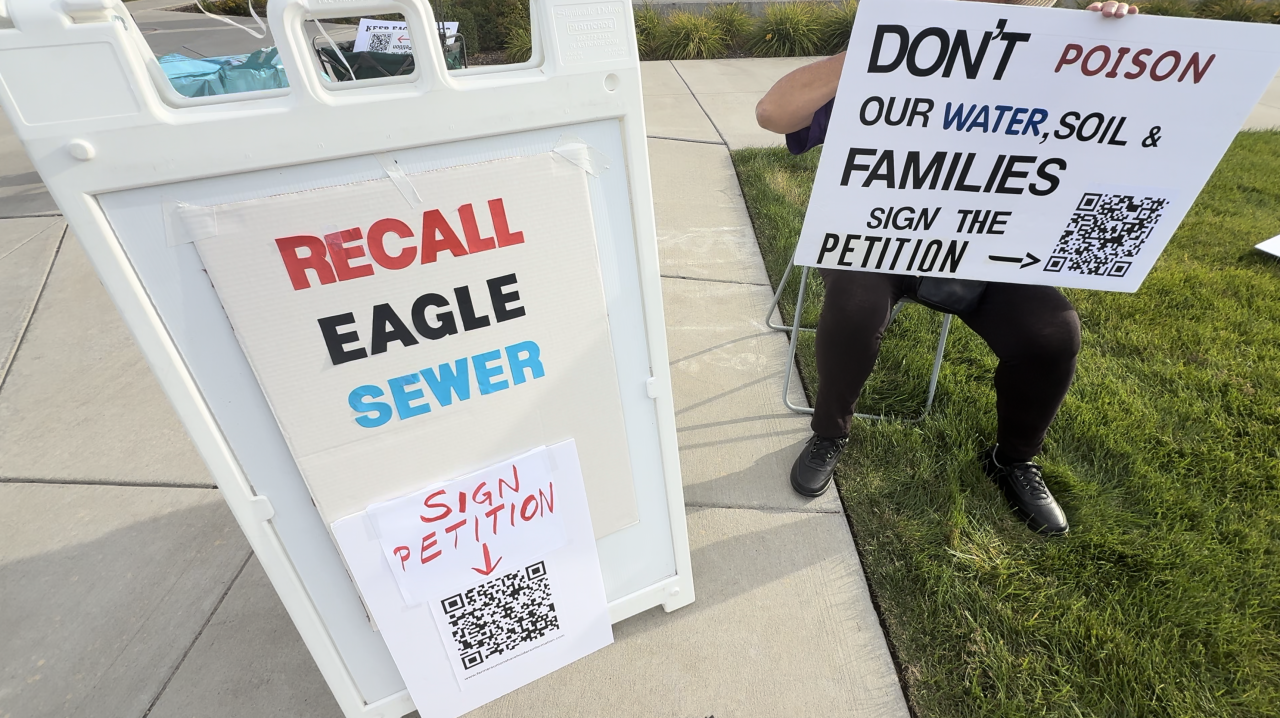
Idaho News 6 has been covering the project since December, speaking with both supporters and opponents of the plan. While some neighbors support the project as a way to keep water local for irrigation, others continue to raise concerns about PFAS, crops, livestock and long-term impacts.
Neighbors protested outside the facility Tuesday night with signs against the project and encouraged passersby to sign a petition.
The project has also faced questions in recent months about its partnership with the Farmers Union Ditch Company, which would receive the Class A reused water through a pipeline connection once the project is complete.
"The contract that we have with Farmers Union Ditch Company remains unchanged," Jenkins said. "The board has had different views in the recent past, and we're working through some of their concerns, but the contract remains in force and hasn't changed to date."
