


EAGLE, Idaho — Eagle City Hall was packed Tuesday night with neighbors, farmers, and city leaders hearing the Eagle Sewer District present the details of a 25-year agreement with the Farmers Union Ditch Company. The agreement, signed in October 2024, will send Class A treated wastewater into the canal.
Watch to hear from Eagle Sewer District and opposing neighbors.
Before the presentation began, Eagle Mayor Brad Pike asked for a show of hands to see how many people were there for the sewer and Farmers Union deal. The response made it clear the issue was the main draw of the night.
Pike noted the size of the audience took the meeting "way out of our council meetings' agenda type deal," but said it was important for the city to hear from residents. However, he clarified the city's role in the dispute.
"We have no jurisdictional authority over any of your other taxing districts that you paid your dollars to. We are only 11.4% of your taxes come back to the city for city business," Pike said.
Pike explained that districts like the sewer, fire, and schools have their own elected boards and budgets. But because many residents don't know where or when those other districts hold their meetings, Pike said the city felt it was relevant to allow the preliminary questioning to start at the council meeting.
To manage the large crowd, Pike asked attendees to limit their comments to three minutes and avoid repetitive statements, urging the crowd to keep the debate professional and civil.
Eagle Sewer District General Manager Neil Jenkins then explained the district's operations and the standards the water must meet. The district currently cleans about 2.8 million gallons of water a day — enough to fill a football field nearly 9 feet deep.
Currently, the district cleans the water most of the way and sends it to the City of Boise, which removes phosphorus, disinfects it, and puts it into the Boise River for irrigation and recreation.
Jenkins explained that the Department of Environmental Quality (DEQ) requires less disinfection for rivers than for canals. Because people get "more up close and personal" with irrigation canal water, Jenkins said it is disinfected five times more than river water.
To produce Class A water, the district is investing $20 million in new infrastructure, including 5-micron filters, 2-micron filters, and an ultraviolet disinfection system to kill viruses. The district has submitted its reuse permit application to the DEQ and expects a final permit in the spring of 2027.
Jenkins noted that water reuse is not a new concept in the Treasure Valley, stating it has been going on since the 1960s. When surveyed in 2023, patrons overwhelmingly said they wanted to "keep the water local" for summer irrigation and winter groundwater recharge, rather than putting it in the river for others to use.
The 25-year agreement gives the Farmers Union Canal exclusive rights to the Class A reused water. Jenkins stated the Eagle Sewer District Board is "resolute in continuing that agreement" and noted that, to date, they have not received any written desire from the Farmers Union board to change or break the contract, despite a meeting on March 19 where options were explored.
"It’s Class A water, or it does not go in the canal. Then once the water is in the canal, it becomes a responsibility of the Farmers Union Ditch Company," Jenkins said.
Jenkins added that if the water fails to meet Class A standards at any point, the district would immediately halt all discharges into the pipeline. The water would be retreated at the facility until it meets the standards, or sent to the City of Boise's treatment plant if it cannot.
Even after the presentation, many neighbors continued to raise concerns, focusing on chemicals they believe could accumulate over time.
"We don’t want the forever chemicals on our land," Eagle resident Shelly Conrad said.
Conrad, who has lived in Eagle for 25 years, said he has a small herd of sheep and grows garlic that his family and community members eat. He noted that his farming is not certified organic, but he considers it "holistic," which is why he is so concerned about "forever chemicals" on his land. He also pointed out that most people in the room found out about the agreement after it was executed, calling the community outreach "sketchy."
"What flows through these canals does not stay in the canals," Eagle resident Nancy Shegeres said.
"I think it’s a bad idea now because of the unknown effects to all of us... humans and animals," another Eagle neighbor said.
"There is no amount of money, cost-saving measures, that's going to buy anybody's health," Eagle resident Margaret D'Agostino said.
Kathy McGowan, an Eagle resident of over 40 years, said she uses a well and irrigates her pasture with irrigation water, all of which ends up in the aquifer. She expressed concern not about the things the district filters for, but the things that are too small for the filters, like microplastics, pharmaceuticals, and forever chemicals.
When asked if the new 2-micron filters would remove microplastics, Jenkins acknowledged that while they would remove anything larger than 2 microns, many microplastics are smaller than that and would pass through.
Richard Llewellyn, who holds a PhD in biochemistry and lives in unincorporated Ada County along Hill Road, testified that he grew up on the Farmers Union Canal and that his well and his neighbors' wells are all recharged by the canal. He pushed back on the claim that the water isn't used for drinking, noting that the canal is the primary recharger of the traditional drinking water aquifer.
Llewellyn warned that PFAS (forever chemicals) are considered toxic over a lifetime and persist in the soil, where they can be taken up into crops and vegetables or travel down into the drinking water aquifer. He called the plan a highly efficient way to contaminate the aquifer.
When asked if the district could treat the water to a level where it could be dumped directly into the Boise River (like the City of Boise does), Jenkins explained that removing nitrogen and phosphorus to prevent algae blooms is very expensive. He said an analysis in 2023 estimated that the option would cost in the $100 million range, compared to the current $20 million project.
Gina Mulhern, a resident of Star, testified that the issue affects her city as well. She noted that Star has its own wastewater system that discharges into the Boise River, meeting strict standards, and that Star residents don't understand why Eagle's "lesser treated sewage water" should be put on their property when their own waste is handled more efficiently.
Mulhern argued that Eagle is saving money at the expense of Star families. She also raised concerns about property values decreasing and asked for certainty that the treated sewage water would not contaminate the cows her family grazes on canal-irrigated pasture when they are rendered into food.
While many Eagle neighbors remain opposed, a few see the agreement as a necessary solution.
"Because it’s going to extend how we are able to water our agriculture," one unidentified neighbor said at the meeting.
On Monday afternoon, Idaho News 6 toured Mike Campos’ property in Star, where he showed me the fields, trees, and animals that depend on agricultural water from the canal — and explained why he supports the agreement.
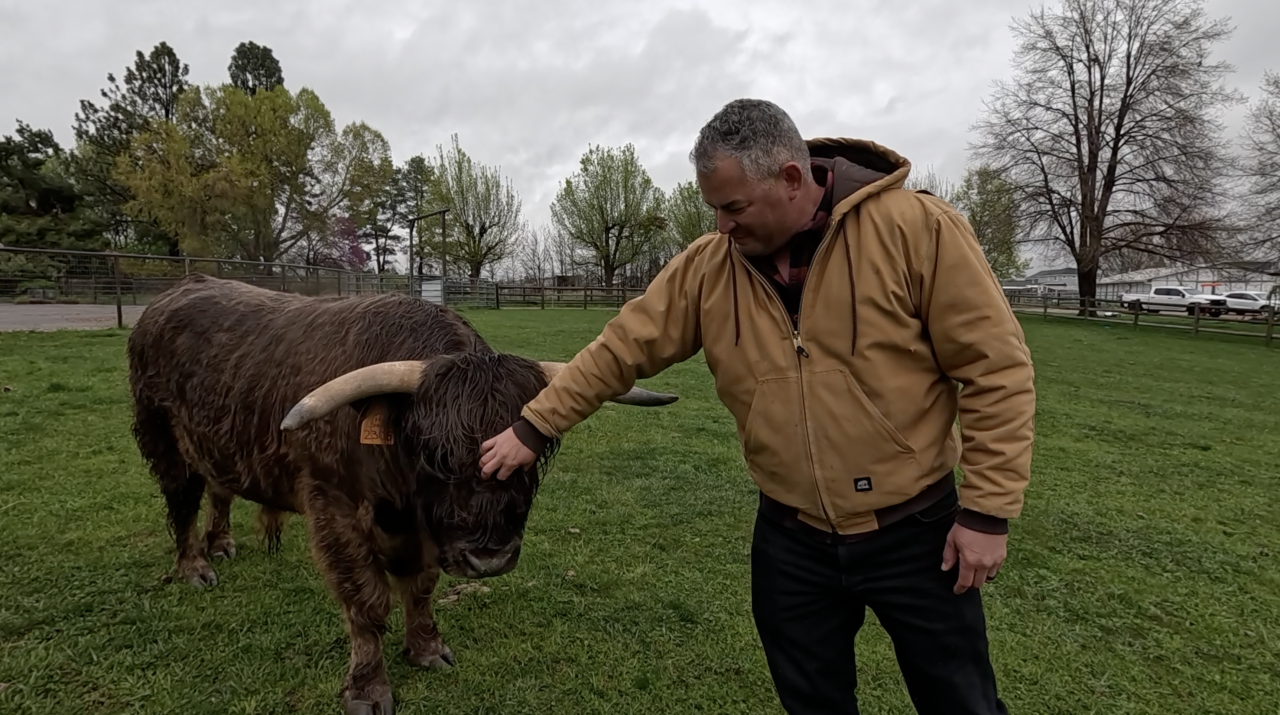
Campos lives in Star Acres, a neighborhood built in the 1960s with the vision that homeowners could farm for themselves and for a living. The neighborhood has 32 shares of water and relies on the Emmett Lateral Gate 120, which buys its water from the Farmers Union Ditch.
Campos explained that residential wells in his area are legally restricted to residential use only. If they lose access to agricultural water from the canal, residents would be forced to spend a lot of money to dig additional wells specifically for agriculture, which would put a strain on the clean drinking water aquifer.
He noted that his neighborhood coordinates a schedule to share the ditch water consistently. If the water is shut off for just one week, the fields start turning brown. After a month, the fields die, forcing owners to spend thousands of dollars the following year to reseed.
Campos raises Highland cows and grows grass to feed them. If the fields die, he would be forced to buy expensive hay in the middle of summer, driving up demand and prices.
"We can’t just run out here with a garden hose and water these acres, people depend on this for their living," Campos said.
Addressing contamination concerns, Campos argued that the Treasure Valley has been farming and raising livestock on this water system for over 130 years without outbreaks of PFAS or pharmaceutical issues. He believes the Class A water coming from Eagle Sewer will be "probably a lot cleaner than what's already in the ditch today."
He also addressed the difference between Boise's river discharge and Eagle's canal discharge, noting that Boise removes nitrogen and phosphorus to prevent algae blooms in the river. However, Campos said farmers actually want those elements.
"Farmers love nitrogen and phosphorus because that's what keeps our plants green and helps our root systems grow," Campos said.
Campos expressed deep concern over the new Farmers Union board's push to cancel the contract, noting that the potential multi-million dollar settlement would fall on shareholders.
"These property owners don't have the money to participate in that settlement," Campos said, adding that the board should instead be spending its time finding ways to get more water.
He emphasized that the Farmers Union ditch was originally designed to protect the area from falling back into a drought or Dust Bowl scenario like the Great Depression.
"Without this water, this desert turns to dust," Campos said.
"We need to keep going forward and continue to find more ways to get more water as our climate gets warmer and as more residents put a strain on our clean water systems," Campos said.
Jenkins said the district is committed to ongoing oversight and invited anyone with concerns to contact him for a tour of the facility to see the $20 million investment firsthand.
"Just like we’ve done with all these other processes, we’ll continue to learn, study, and monitor," Jenkins said.
For neighbors like Conrad, the opposition comes down to protecting the area they call home.
"People care about their community… we care about our environment," Conrad said.
Mayor Pike concluded the public comment section by asking residents to send their comments directly to the Eagle Sewer District so they have a record of them. He reiterated that the City of Eagle is merely a shareholder in the canal, not a partner with the other taxing districts.
The Eagle Sewer District says the agreement with Farmers Union remains in force. The district plans to transition its own property's irrigation needs to Class A water by next April, with the pipeline to deliver the water to the Farmers Union Canal expected to be completed in the summer of 2027.
