

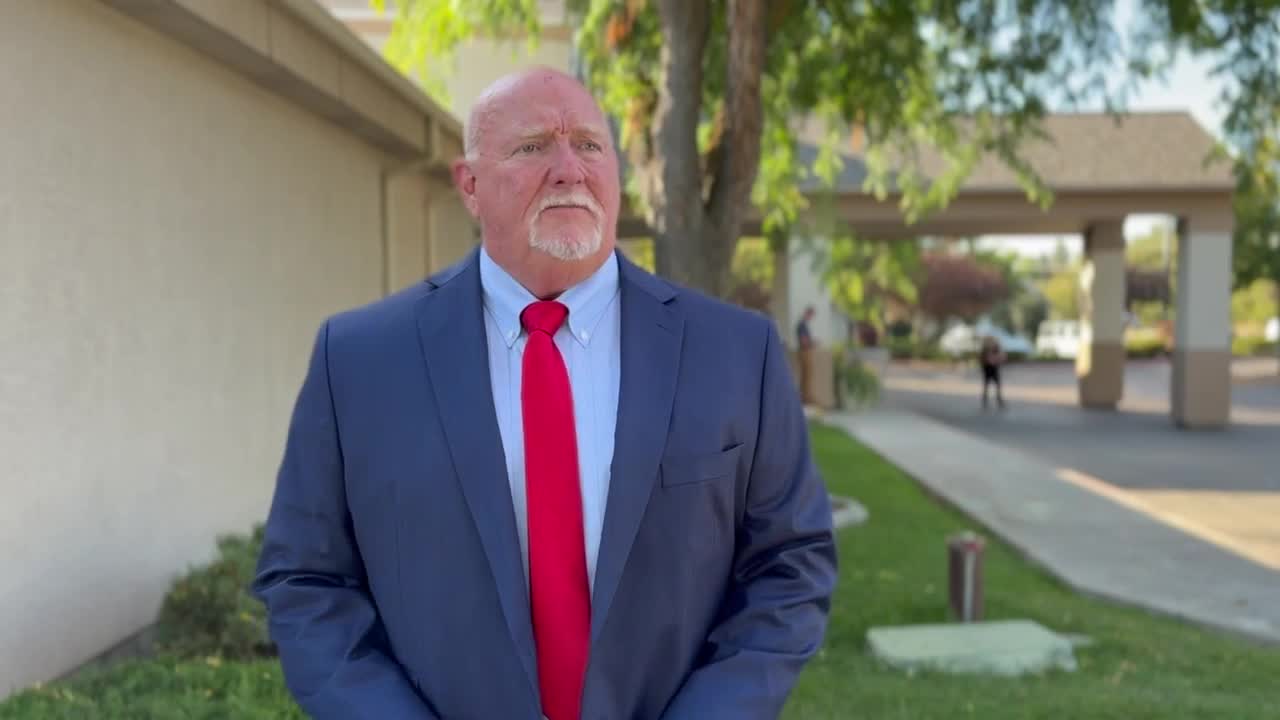


EAGLE, Idaho — Eagle Mayor Brad Pike used his State of the City address to highlight the Eagle Regional Athletic Park as one of the city's biggest long-term investments, while also giving neighbors a candid look at how the city manages its finances.
Eagle has grown to more than 40,000 residents across 64 square miles spanning three counties — Ada, Boise and Gem. The city has 16 parks covering 433 acres, 32 miles of trails, more than 100 staff members, and 54 citizens serving on committees and commissions. The city received approximately 651 building permits in the past year, averaging about 72 per month.
Longtime Eagle neighbor Mac McOmber, who has lived in Eagle for approximately 25 to 35 years, recently donated to the future park alongside his wife. McOmber serves on the Eagle Urban Renewal Agency and said the project is exactly what the community needs.
"A great concept is to have parks for kids to play in," McOmber said.
McOmber said his family's plaque on the dugout will carry a simple message — one that dates back to a comprehensive plan update he was involved in more than a decade ago.
WATCH | Eagle Mayor Brad Pike highlights Regional Athletic Park and city finances:
"Eagle is home, do good for the local community, place for the kids to have sports, it's all good," McOmber said.
The Eagle Regional Athletic Park — known as ERAP — is a 90-acre project near Highway 16 toward Villanova expected to include baseball fields, soccer, lacrosse, flat field football and other recreational spaces for families across the region. The city acquired 80 acres through a developer opportunity and purchased an additional 10 acres from a separate landowner.
Phase one of construction will include the driveway, parking lot and four baseball fields at an estimated cost of $4 million. Pike said $17.7 million has been committed to the project overall, with $7.29 million already expended.
Pike said the park fills a real need in the community, particularly after West Valley Little League lost its previous location.
"We have an opportunity not only for them, but the kids in our city and around the area," Pike said. "That 90 acres is going to go a long way in facilitating all the needs for the kids all the way up to adults."
During the State of the City address, Rob Vijunan of Villanova announced that the Villanova Builder Group — including Core Building, Bachman Homes, Biltmore, Venture Title and Anoma, along with other builders — presented a combined $500,000 donation to the park.
Vijunan noted that Clyde Capital Group, Villanova's parent company, previously donated approximately 600 acres of property worth $5.3 million to the city for recreational purposes and is carrying a no-interest loan for the park that defers approximately $2.9 million in interest the city would otherwise owe a bank.
"We are really invested in the project and glad that we can be a part of it," Vijunan said.
Pike thanked the donors and said the announcement raises the bar.
"Now you set the bar, so now we're going to get out and get some more donations, right?" Pike said.
An additional $20,000 in personal donations has been received so far. Pike said the city is actively seeking more.
The funding structure is unique, drawing from park impact fees, capital funds and community donations. Every new rooftop built in the Villanova development generates park impact fees that flow back to the developer on an interest-free basis.
"The growth pays for growth on every aspect of that kind of stuff. But it's something the community has been looking for, especially on the west side," Pike said.
Pike said donations remain critical to reaching the $4 million needed for phase one construction. The city has $2.8 million in its budget for the construction phase. If the council approves approximately $1 million in capital funds and $200,000 in park impact fees, the city would reach the $4 million target.
"Donations are the ones we're really hoping people step up and help commit because it's their park," Pike said.
Pike was candid about the gap between how residents perceive Eagle's finances and the reality of running the city.
"We are an affluent community, but a very financially challenged city," Pike said.
Eagle's total budget dropped from about $68 million last year to roughly $58-59 million this year. Pike said the reduction came from a combination of decreased incoming revenue and a cleanup of the capital plan — removing prior-year project funding that was no longer needed.
The city's operating budget — the money available for day-to-day operations — totals $42,819,273. That figure is funded through sales tax, liquor tax, property tax, permit and building fees, impact fees, outside agency costs, and carry-forward funds. It covers all daily city operations, including utilities, supplies, technology, maintenance, insurance, professional services and community programs.
Eagle only receives 12% of the property tax collected from residents — roughly $5.5 million annually. The remaining 88% goes to other entities including the school district, ACHD, Ada County, Eagle Fire, Eagle Sewer, Emergency Medical, the College of Western Idaho and others.
Eagle's levy rate is approximately $45 for every $100,000 of taxable home value — the lowest in the Treasure Valley and the second lowest in the entire state of Idaho. Pike said the city could double its levy rate and still be below many comparable cities.
"We are even lower than the city of Star," Pike said.
Despite those constraints, city staff produced $735,460 in operating budget savings after Pike and city treasurer Laurie asked department heads to review their line items and find reductions. The savings came entirely from that voluntary internal review.
"That $735,000 is nothing to sneeze at, right? That's a significant reduction in your tax dollars that have been saved so we can have better things and work harder for the projects that are needed out there," Pike said.
Pike said the city's financial focus going forward will be on building reserves and completing existing capital projects.
"The finances are going to be tricky the rest of the next couple of years because what we're doing now is trying to make sure we have a strong foundation. Our reserves are solid in case there's an emergency, or something comes up. Gotta pay the bills, right?" Pike said. "I think the council's going to do a good job making sure that budget is equal and adequate for the needs of the city."
Pike highlighted several completed projects from the past year, including the downtown mobility project completed in November, the reopening of the archery range at Willow Creek in early spring, and the completion of Friendship Park this summer. Pamela Baker Park is still in progress.
The city is also working to preserve more than 1,900 acres of BLM land near Beacon Light North as open space for public recreation.
A new traffic signal at Palmer Lane and Highway 44 is expected between now and next spring, the result of collaboration between ITD, ACHD, the city of Star, the city of Eagle and Ada County.
