


EAGLE, Idaho — Cynthia Wilson recently returned from a 40-mile trek through the Andes Mountains in Peru, a journey she undertook to raise awareness for prostate cancer.
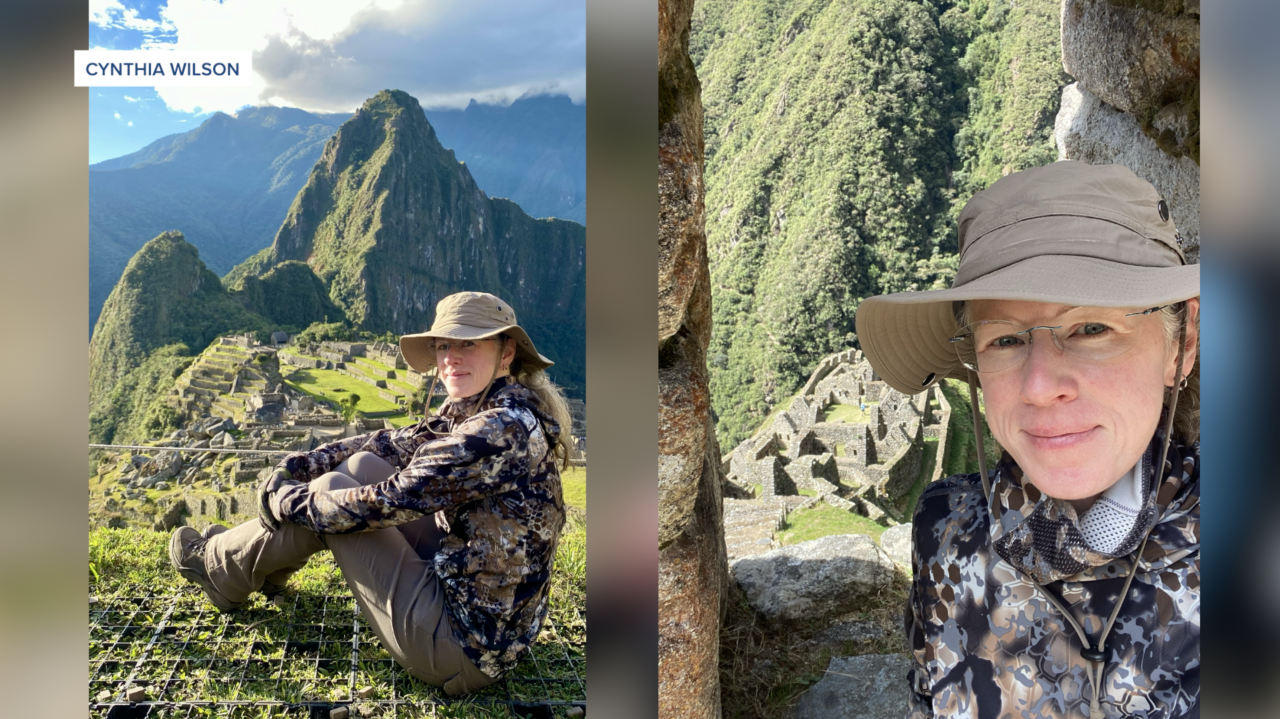
The route included the Ausangate region — a challenge even for experienced climbers — in addition to the trek up to Machu Picchu. During the journey, Cynthia's oxygen levels dropped into the low 60s. She is allergic to Diamox, the medication commonly used to treat altitude sickness, and instead relied on special breathing techniques she had practiced before the trip.
WATCH: Avimor family rallies community for 6th annual prostate cancer awareness walk
Her guide told her she needed to reach an oxygen level of at least 70 by morning or face a medical evacuation. She made it.
"By morning it was about 68 to 70, and I'm like, it's good enough, let's just keep going," Cynthia said.
Despite the physical demands of the trek, Cynthia returned home in better shape than when she left — a result that surprised even the medical professionals who had worked with her beforehand.
Darrell Wilson, Cynthia's father, tracked her progress from home using a GPS tracker. He said communication was poor throughout the journey, which meant the family often did not know the details of what she was facing.
"Fortunately, communication was very poor, so we couldn't actually know that she was in trouble," Darrell said.
Darrell said the trek was originally his idea — he had seen ZERO Prostate Cancer publish information about the Machu Picchu trek and pointed it out to Cynthia, knowing she had wanted to do it for years. What started as a suggestion grew into something far more demanding than either of them anticipated. Darrell said he tried to encourage Cynthia to step back as the scope of the trek expanded, but she refused.
"She has never been much of a quitter," Darrell said. "We were really proud of her to even try it, much less accomplish it."
Darrell said watching Cynthia take on increasingly significant challenges connected to the cause has meant a great deal to him.
"As the years progress and the cancer progresses, seeing her take on more and more challenges involved with the program is inspiring," Darrell said.
Cynthia said the experience changed her in ways that went beyond physical endurance.
"The trip broke me, but it broke me in a good way to where there's less of a block, and there's more ease in acceptance of things," Cynthia said.
She said the mental shift has helped her navigate what she came home to. While Cynthia was in Peru, Darrell had a health event he initially kept from her — he underwent surgery while her brother flew out to be with him. Since her return, the family has faced a series of emergency room visits and significant changes in Darrell's condition. Cynthia's mother was also diagnosed with cancer during this period and has begun chemotherapy.
Darrell entered hospice care just days before this interview. He said the disease has accelerated faster than he expected since December, after years of successfully managing it through a series of treatments — each of which worked longer than clinical trials had predicted. Five of the drugs and treatment systems he has used were developed through research and received FDA approval since his diagnosis in 2009.
"To have it all of a sudden, you know, just since December essentially accelerate so fast has been unnerving," Darrell said.
Darrell said the acceleration has been difficult to process in part because there are no visible signs of the progression.
"Everything's internal and, so that's, that's peculiar and difficult to understand, to cope with. But it's real," Darrell said.
Along the way, Darrell developed hip fractures as the cancer weakened his bones, making mobility difficult. He said the fractures will not improve — only degrade more slowly with less pressure on them.
Darrell said the medical system was not always equipped to meet him where he was. He described a period where his large treatment team seemed to hit a wall, leaving him without adequate pain management at a critical time. Cynthia said the experience felt like abandonment at the moment it was needed most.
Darrell said palliative care — which focuses on comfort rather than cure — was difficult to access and described it as an underserved area of medicine. He said getting into hospice itself was straightforward, but understanding how to use it is still new. One unexpected benefit of entering hospice, he said, has been getting off several cancer medications — including hormone therapy drugs he had been on for years that affected his mood.
"It's not a curative, it's not even a management of the disease program. It's the management of the patient comfort," Darrell said.
For men who have been diagnosed or are concerned about prostate cancer, Darrell said the most important thing to understand is that an early diagnosis changes everything. He said symptoms mean the cancer has already left the prostate — and once it has spread, the thousands of different cell types that make up prostate cancer each have the opportunity to behave differently and multiply in their own way.
"Do not wait for symptoms. Symptoms are bad," Darrell said.
Darrell said 1 in 8 men will be diagnosed with prostate cancer in their lifetime — a number comparable to lung cancer and breast cancer in terms of significance — but that most cases, when caught early, are either curable or manageable.
"If it's diagnosed early, then it's more than 99% controllable," Darrell said.
The family encourages men to begin getting tested starting at age 40. While the average diagnosis age is around 65, Darrell said younger men are being diagnosed and are often caught completely off guard.
His advice to anyone newly diagnosed or navigating the disease: seek out reliable, evidence-based information and do not turn to random internet searches.
"Don't go to the internet for information. Not at random," Darrell said.
For those who want to support prostate cancer research specifically, Darrell recommended the Prostate Cancer Foundation, which he said is particularly strong at funding and advancing research. ZERO Prostate Cancer, the organization the walk benefits, focuses on education, advocacy, and support — including one-on-one counselors, support groups, and mentors, most of which are run by volunteers.
"None of it goes to us. None of it goes to us. It all goes to Zero," Darrell said.
This year's walk is shaping up to be the biggest yet. Two people Cynthia met on the Peru trek are flying in from Chicago to help. A college friend is driving over from Oregon. Cynthia's brother flew in from Vermont to help with their parents' care and is staying for the walk. A neighbor with a marketing background has joined the organizing team. Volunteers have contributed graphic design work for flyers, and neighbors in different sections of Avimor have taken on the task of hanging blue ribbons throughout the community.
"I've done less this year than I've done for any of them, and yet it's bigger and better, so maybe I should step back all the time," Darrell said.
Darrell said the Avimor community has shown up for his family in ways he has never experienced anywhere else he has lived.
"This is a community different than any I've ever lived in," Darrell said.
The walk will take place in Avimor on the left side of Avimor Drive as you enter the community, next to the Gather brewery, Hyde Park Coffee Shop, and the community center. Tresidio Homes, which is building nearby, is also involved as a sponsor.
Raffle items at the walk include a handcrafted birdhouse and a quilt donated by community members, as well as a weekend stay at a McCall condo donated by Darrell and his wife. Smaller raffle items donated by businesses from Horseshoe Bend and across the Treasure Valley will also be available. Raffle tickets can be purchased at the walk, and attendees who fundraise or donate can earn additional tickets.
Blue ducks hidden around the Treasure Valley and throughout Avimor each have a code on the bottom. Bring one to the walk to find out if it is a prize winner. Hyde Park Coffee is also placing small blue ducks on cups at both of its locations with a QR code that links to walk information and donation options. Anyone who donates — even $1 — becomes a team member for the walk.
September is Prostate Cancer Awareness Month, which is one reason the family holds the walk this time of year.
"The journey just keeps going when you get home, and it's harder here than it ever was out there," Cynthia said.
When asked about facing the end of his battle, Darrell found a way to look at it with gratitude — surrounded by his daughter, his son, their spouses, and a community that has shown up for him in ways he never expected.
"If you gotta go out, this is a good, good way to do it..." Darrell said.
"With a lot of support and love?" Cynthia asked.
"Yeah," Darrell replied.
The 6th Annual Prostate Cancer Awareness Walk will take place in Avimor, across the street from Hyde Perk, on Saturday, Sept. 19 from 10 a.m. to 1 p.m.
