

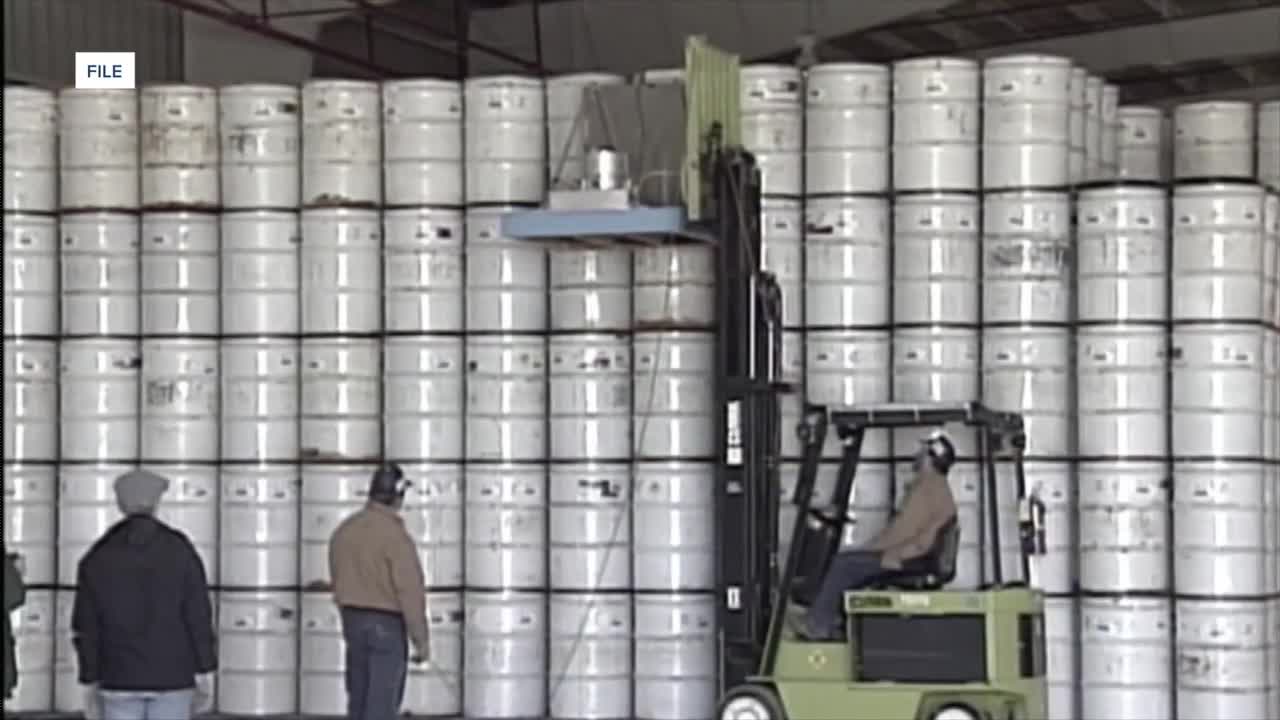


BOISE, Idaho — The U.S. Department of Energy is considering five states for nuclear campuses that could receive used nuclear fuel from around the country for reprocessing and disposal.
Idaho is among those finalists pursuing what's known as a Nuclear Lifecycle Innovation Center.
The center would be located in the eastern Idaho, and could bring thousands of jobs and billions of dollars to the state.
Nuclear energy is often referred to as clean energy, because it doesn't produce greenhouse gasses, but The World Nuclear Association says used nuclear fuel can remain radioactive and deadly for thousands of years.
"How much we talking about a few hundred pounds?" Idaho News 6 senior reporter Roland Beres asked.
"We’re talking about 33 thousand tons," Leigh Ford, Executive Director of the nuclear watchdog group the Snake River Alliance responded.
“Worst case scenario if it comes in. We have a whole bunch of nuclear waste, forever and our kids are going to have to figure out what to do with it,” Ford added.
The Nuclear Waste Policy Act of 1987 designated Nevada’s Yucca mountain as the nation’s permanent nuclear waste storage site. However, they fought tooth and nail to stop it and won. As a result, that high-level waste is being stored in temporary pools at nuclear power sites around the country.
Now, to attract state interest the DOE has shifted from mandating a host community to proposing economic incentives like billions in investments and job creation.
Although details are quite limited, that grabbed Idaho Governor Brad Little's attention.
“We're going to consume the spent fuel to create electricity," Little told Idaho News 6. "We are not going to put any spent fuel or whatever it is over the Idaho aquifer. They know that.”
According to the State’s application with DOE, the Snake River aquifer underlies almost 11 thousand square miles.
“I don’t know how it wouldn’t affect the aquifer, “ said Ford.
Even if the waste ends up being stored far from the aquifer, it would have to be shipped in … which presents even more challenges.
“Trucks trains, and you know how many railroad accidents there have been," Ford says. "God forbid we have one with nuclear.”
Despite Idaho being a finalist to take on this massive project, Governor Little clarified no plan is set in stone.
“Um, all we've signed so far is an agreement to talk,“ Little told Idaho News 6.
If an agreement were to be finalized, waste shipments could begin as early as next year.
Little is confident Idaho could handle it.
“When the Department of Energy, uh, 40 years ago was just taking and dumping waste out onto the ground," Little said. "That's all been cleaned up. We've met 98% of our benchmarks on cleanup. We've got a great track record of cleaning everything up. We'll continue with that.”
Previous Idaho governors Cecil Andrus and Phil Batt went to great lengths before their passing to get a written agreement from DOE to keep Idaho from becoming the nation’s nuclear waste dump.
“What do you think Cecil Andrus and Phil Batt would think of this right now," Ford opined. "I think they’d be horrified they worked together to keep us safe and to see this happen, I think they’re rolling.”
