

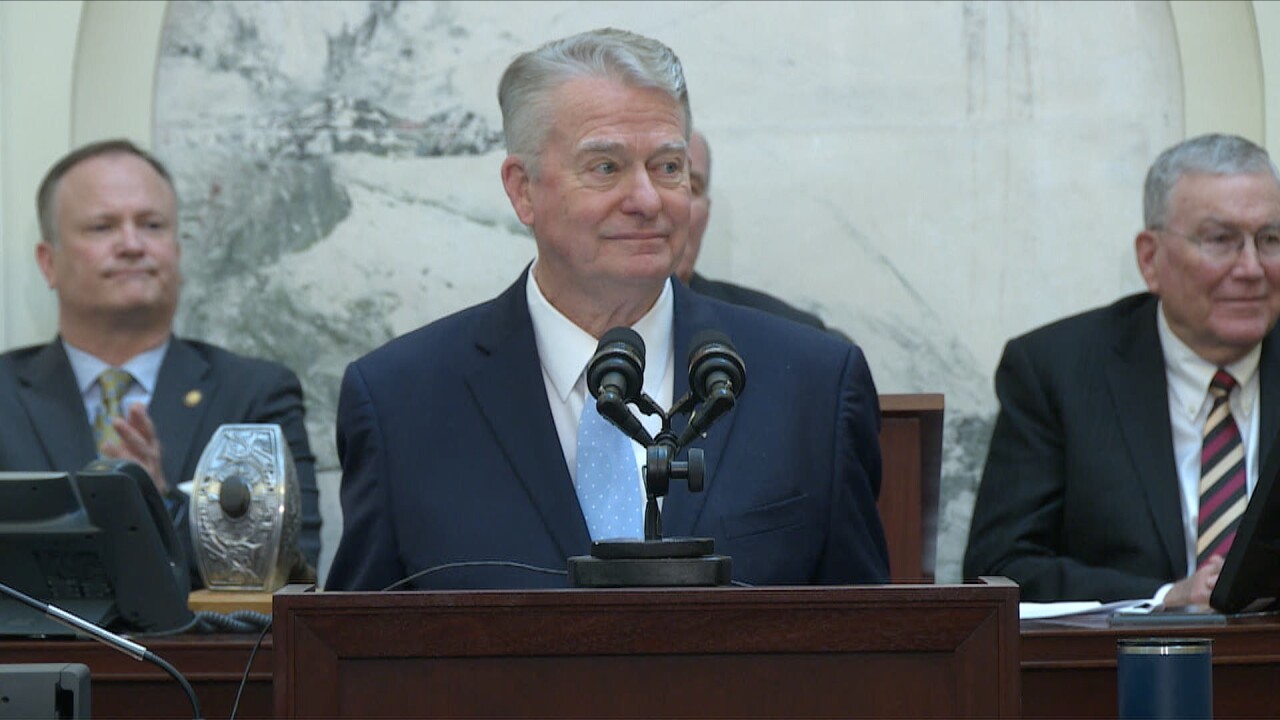

BOISE, Idaho — Since the Idaho legislature ended its 2026 session, Governor Brad Little has vetoed five bills, one of which was a line-item veto.
The vetoes apply to House Bill 674 (telecom services), House Bill 758a (daycare regulation), House Bill 968 (appropriations), House Bill 975 (Rainy Day Fund), and Senate Bill 1359a (virtual currency protections).
Ultimately, Gov. Little deemed the bills not worthy of his signature.
Here's a breakdown of each bill and why it was vetoed.
House Bill 674 - Telecom Services
HB 674 aimed to clarify when the Idaho Public Utilities Commission must seek FCC authorization to discontinue telecom services for customers.
Little said the bill doesn't account for rural Idahoans, "who could lose access to essential telecom services if the federal government acts without considering state input."
House Bill 758a - Daycare Regulation
HB 758a was passed by legislators after two issues were identified in a similar bill from a previous session. The bill would have allowed in-home daycare providers to use video cameras to monitor sleeping children. The bill would also have removed the requirement that daycares count their own school-aged children for licensing purposes, along with other regulatory rollbacks.
In his veto letter, Gov. Little said the bill "threatens child safety." He also contends that the bill would omit licensing and fire inspection requirements for daycare providers, which "would prove catastrophic."
Lastly, Little states: "This bill heightens the risk of fraud and abuse because bad actors will more easily take advantage of the new requirement for the state to verify which children in a home are legitimate relatives."
House Bill 968 - Appropriations Bill - Line Item
HB 968 directed the transfer of funds from the Twenty-Seventh Payroll Fund into the General Fund for the purpose of balancing the 2026 fiscal year budget. The bill also transfers funds that were previously earmarked for legislative space remodels to the Legislative Account. Lastly, the bill would fund the Strategic Initiatives Fund and the Fire Suppression Deficiency Fund.
In his line-item veto, Gov. Little canceled an appropriation of $5,803,500 meant for the remodel of legislative space. Little also vetoed the Twenty-Seventh Payroll Fund transfer, saying it would undermine the fund's purpose to hold adequate funds for Fiscal Year 2028, when the state expects to incur an "additional payroll cycle."
"Redirecting these funds now undermines their intended purpose and would place the state in a difficult position when these obligations come due," reads a statement from Gov. Little.
House Bill 975 - Rainy Day Fund Requirements
HB 975 would mandate that no transfer be made from the state's Budget Stabilization Fund (Rainy Day Fund) if the balance exceeds 15% of the General Fund revenues for Fiscal Year 2026. The Rainy Day Fund currently holds a balance of $880.2 million. However, the bill would have allowed for the transfer of capital from the Rainy Day Fund if General Funds aren't enough to balance the budget in accordance with the Idaho Constitution.
Little said his veto was based on Idaho code, which mandates that excess funds be transferred to the General Fund for "broader and unforeseen state priorities as they arise."
He concluded by saying the funds may be required by wildland firefighters this upcoming summer after the Legislature rejected the Governor and Land Board's request for "prefunding the Fire Suppression Fund on an ongoing basis."
Senate Bill 1359a - Virtual Currency Protections
SB 1359 was written to address instances of virtual currency fraud related to cryptocurrency kiosks. "The bill requires kiosk operators to register with the state, provide clear fee and exchange rate disclosures, post fraud warnings, maintain transaction records, and implement reasonable transaction limits and basic fraud-prevention safeguards."
Gov. Little asserts that the bill contained "critical drafting deficiencies" that resulted in ambiguous definitions of the issues at hand. However, he recommended the legislature revisit the issue in the next legislative session with "tighter definitions, clear enforcement standards, and a realistic implementation framework."
