

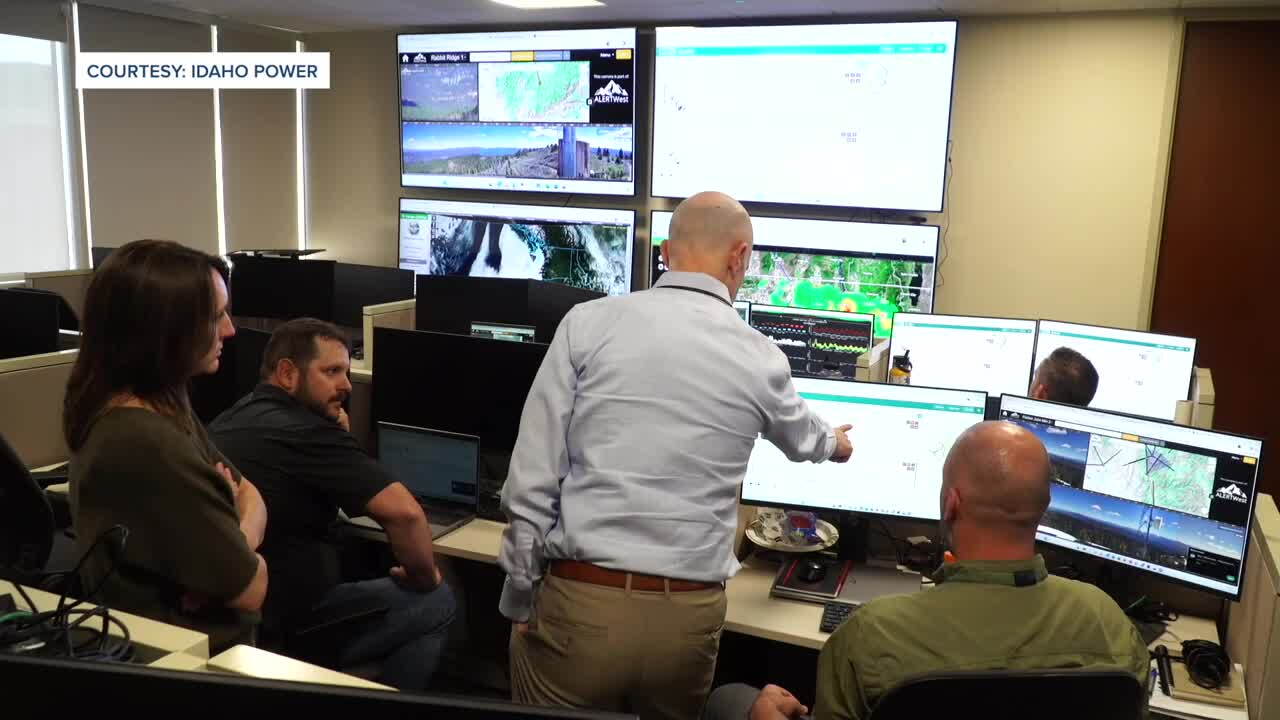


This summer, Idaho has seen severe thunderstorms, high winds, and wildfires, creating dangerous conditions across the state. When weather disasters strike, a rapid and coordinated emergency response can make all the difference. Idaho Power's emergency incident response team works around the clock to monitor changing conditions and make critical decisions to protect customers, communities, and infrastructure.
At the center of that effort is Idaho Power's emergency response room, where teams of meteorologists, atmospheric scientists, engineers, and wildfire specialists monitor weather threats in real time.
"In the winter time it can be ice storms, it can be snow storms, or it could be just high winds," said Jon Axtman, Idaho Power's Director of Wildfire Mitigation. "In the summertime it's those situations that involve low humidity, dry fuels and high winds. That's what we are most concerned with."
Axtman has seen firsthand how weather events can impact Idahoans and the electrical grid. Every response begins with constant monitoring and preparation long before dangerous weather arrives. One of the key people helping guide those decisions is Derek Blestrud, an atmospheric scientist with Idaho Power.
"Our team is looking at thunderstorms, we are looking at wind speeds, we are looking at individual weather stations," Blestrud explained. "Then when we see something critical happening, we relay that to the people that are making decisions, whether we should keep the power on or turn it off."
See how Idaho Power responds to severe weather:
During significant weather events, Idaho Power can have teams of up to 80 people working together to assess risks, prepare for emergency power shutoffs when necessary, and coordinate responses across the state. Wildfire threats remain a major focus during Idaho's hot and dry summer months.
"If the fire is close to the lines, we'll start to look at encroachment on our lines," Blestrud said. "We will run fire simulations of where that fire is going to spread to. We will look at weather situations to see if there's an impact to our distribution system or transmission systems."
The company's preparedness efforts extend far beyond wildfire season. Idaho Power uses data collected from more than 200 weather monitoring sites throughout its service area. Advanced sensors on power lines can detect hazardous conditions and automatically respond when severe weather threatens critical infrastructure.
As Idaho's weather continues to present challenges year-round, Idaho Power says its investment in forecasting technology, weather monitoring, and emergency response planning helps the company adapt to an ever-changing forecast while working to keep customers safe and informed.
This story was initially reported by a journalist and has been, in part, converted to this platform with the assistance of AI. Our editorial team verifies all reporting on all platforms for fairness and accuracy.
