

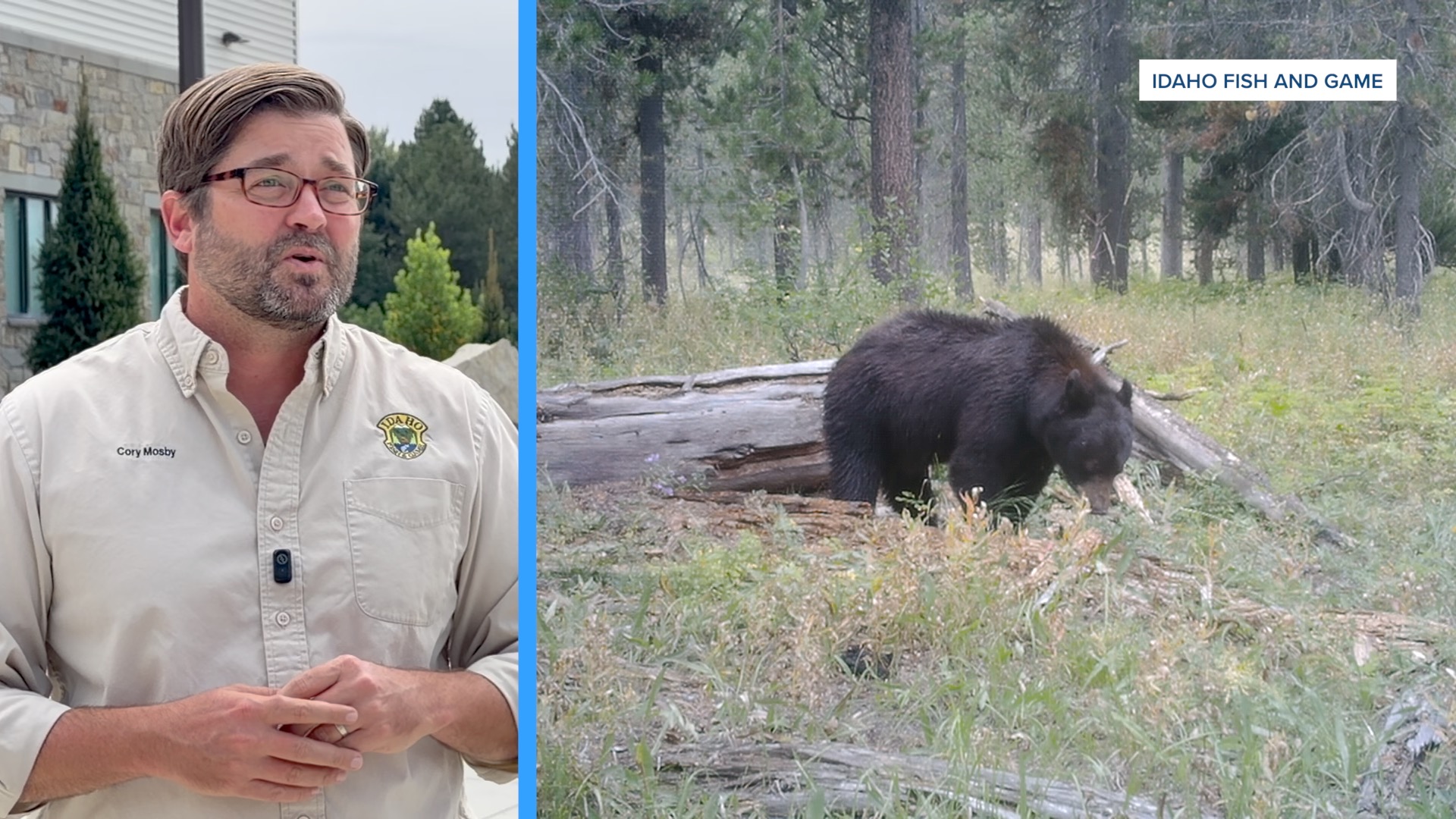


As colder temperatures approach across Idaho, bears are preparing for winter, too. But this year, wildlife officials say a lack of food supply is driving more bears into neighborhoods — leading to a growing number of encounters with people.
Idaho Fish and Game recently released an article regarding the uptick in bear encounters with tips to keep these wild animals away from residential areas.
Here what wildlife managers have to say about bear encounters:
Recently, residents in Boise's Harris Ranch neighborhood spotted a young black bear wandering through residential streets.
"He was trying to climb a tree, and they said he looked terrified," said Shannon Moore, a bartender at Lucky 13. "And then he got stuck in someone's backyard and was trying to climb up over the fence."
Wildlife officials say the Harris Ranch bear is just one example of a trend they are seeing across the state.
"We have multiple regions in the state that are getting at least one call a day," said Cory Mosby with Idaho Fish and Game. "You can really link it back to some weather conditions that happened earlier in the season."
According to Fish and Game, a warmer winter followed by a late-season freeze damaged many of the natural food sources bears depend on this time of year. While black bears are classified as carnivores, much of their diet consists of plants, berries, and other vegetation.
Mosby says those weather impacts, combined with drought conditions, have left bears with fewer options in the wild.
"And the lack of natural foods on the landscape because of that drought, because of that late spring frost, is really pushing those bears into abnormal places," he said.
With bears actively trying to build up fat reserves before hibernation, officials say communities can play an important role in preventing wildlife conflicts.
Fish and Game recommends removing or securing anything that could attract bears, including pet food left outdoors, food stored in outdoor refrigerators, and garbage containers. Officials also encourage residents not to place trash curbside the night before pickup whenever possible.
By eliminating easy food sources, wildlife managers say bears are less likely to associate neighborhoods with meals, reducing the chances of future encounters.
If you see a bear in your neighborhood, Idaho Fish and Game urges residents to keep a safe distance and contact the agency rather than approaching the animal.
This story was initially reported by a journalist and has been, in part, converted to this platform with the assistance of AI. Our editorial team verifies all reporting on all platforms for fairness and accuracy.
