

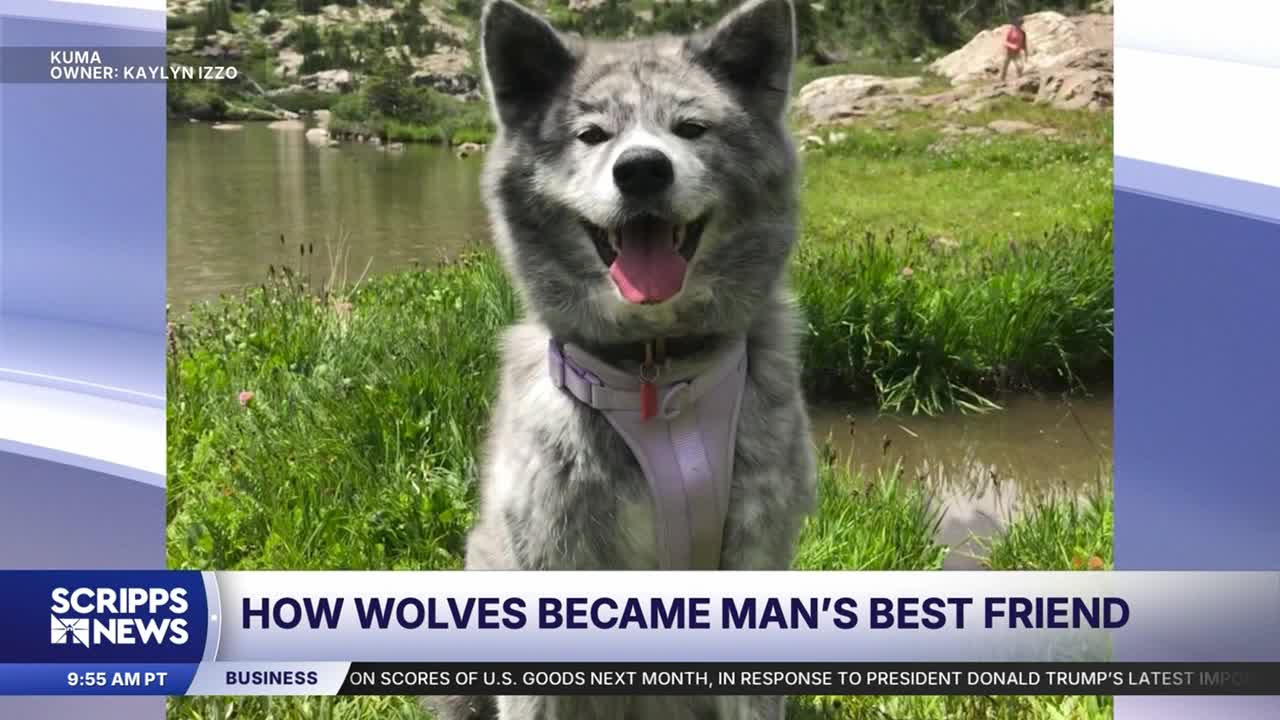


The bond between humans and dogs stretches back thousands of years — long before modern pets ever existed.
At Clemson University, genetics expert Kelsey Witt Dillon is studying ancient dog DNA to better understand how wolves slowly became domesticated companions.
RELATED STORY | Quality time with dogs can relieve stress, heighten concentration
Scientists believe some wolves may have first approached human settlements searching for food and shelter, while others think humans may have gradually tamed wolf pups over generations.
"Dogs were actually the first animals to be domesticated," Dillon said. "So this relationship between dogs and humans is really unique."
Early dogs weren't just companions. Researchers say they often served practical roles — helping humans hunt, herd, guard, or pull sleds. By studying ancient remains, scientists can trace how dogs moved with people across regions, revealing clues about migration, trade, and even what humans were eating.
"We can learn about how dogs moved around, and that can be informative about human movements or trade interactions," Dillon said. "I think we can learn a lot about humans by looking at these dogs."
FROM THE ARCHIVES | Having a canine companion could help you live a longer, healthier life
Researchers are also studying ancient dog genetics to understand why many modern breeds face health problems today — caused in part by selective breeding that reduced genetic diversity.
"Modern dog breeds are actually not very genetically diverse," Dillon said. "And that can come with some risk of disease and high vet bills for some breeds."
Scientists say studying ancient dog DNA may not only help explain the history of human civilization — but could also help improve the future health of dogs themselves.
