

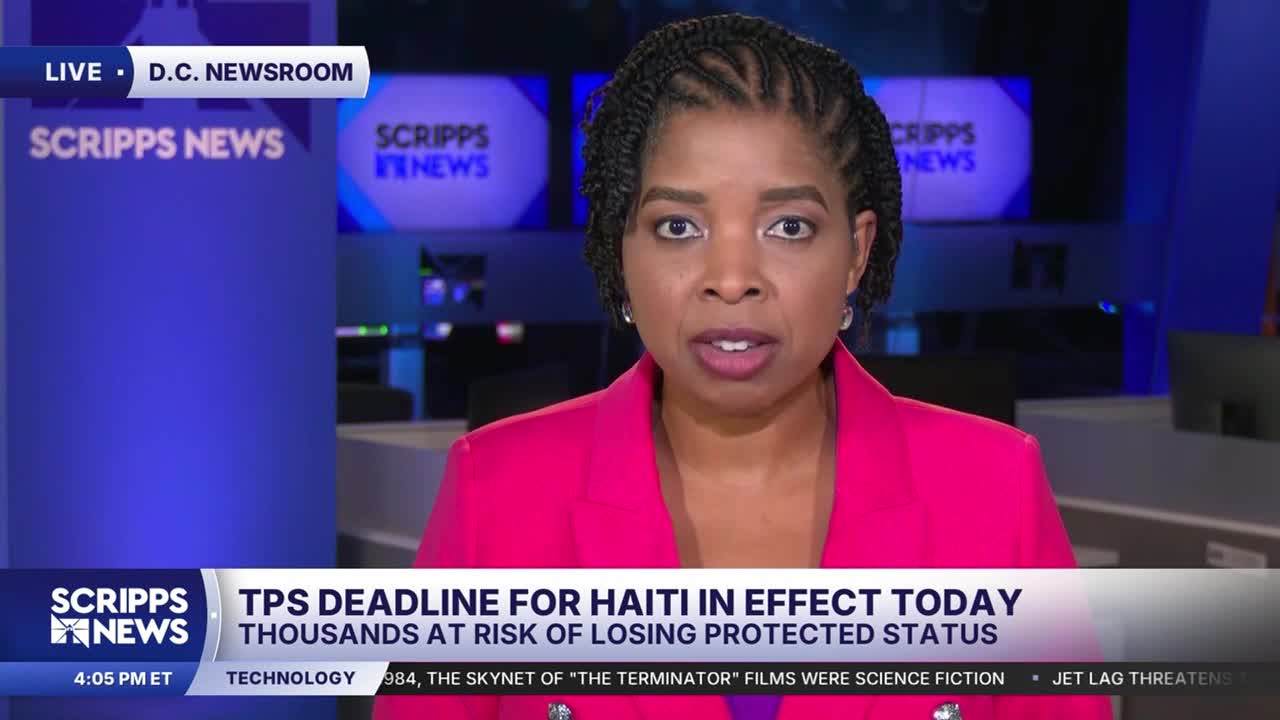



The Temporary Protected Status program is a step closer to officially ending.
The Supreme Court will send the TPS case back to a lower court so that judge can implement the order, giving the Trump administration the green light to cancel the program.
That means many Haitians who had this designation may no longer be able to legally live or work in the United States.
An attorney who represented some Haitians said many are afraid to be deported to their home country.
“All that all the gangs and warlords care about is: Have you spent time in the states? And if the answer is yes, there's an assumption that you've got enough money that you're worth kidnapping," said Geoff Pipoly, lead counsel in the Haitian TPS case.
RELATED STORY | Supreme Court ruling on TPS opens hundreds of thousands to deportation from the US
The Department of Homeland Security would not confirm reporting that ICE plans to target Haitians for deportation, but in a statement, a spokesperson said in part:
“Temporary Protected Status is exactly that—temporary. For too long, TPS has been allowed to function as a de facto amnesty program despite Congress never intending it to be permanent."
Businesses have long been concerned about losing a vital part of the work force.
The VP of a waste management company told Scripps News it’s hard to replace workers with more than a decade of experience.
“We have been aware of the situation for some time, so we've been able to hire up, get some people in training," said Bill Jones, division Vice President for Waste Pro of Florida. "I think it's going to be reasonably smooth transition, but it's never fully smooth when someone who has great experience leaves your company.”
After the Supreme Court’s decision, the Trump administration canceled TPS for more than seven countries, affecting a total of more than 350,000 people. Most of those people are from Haiti.
