

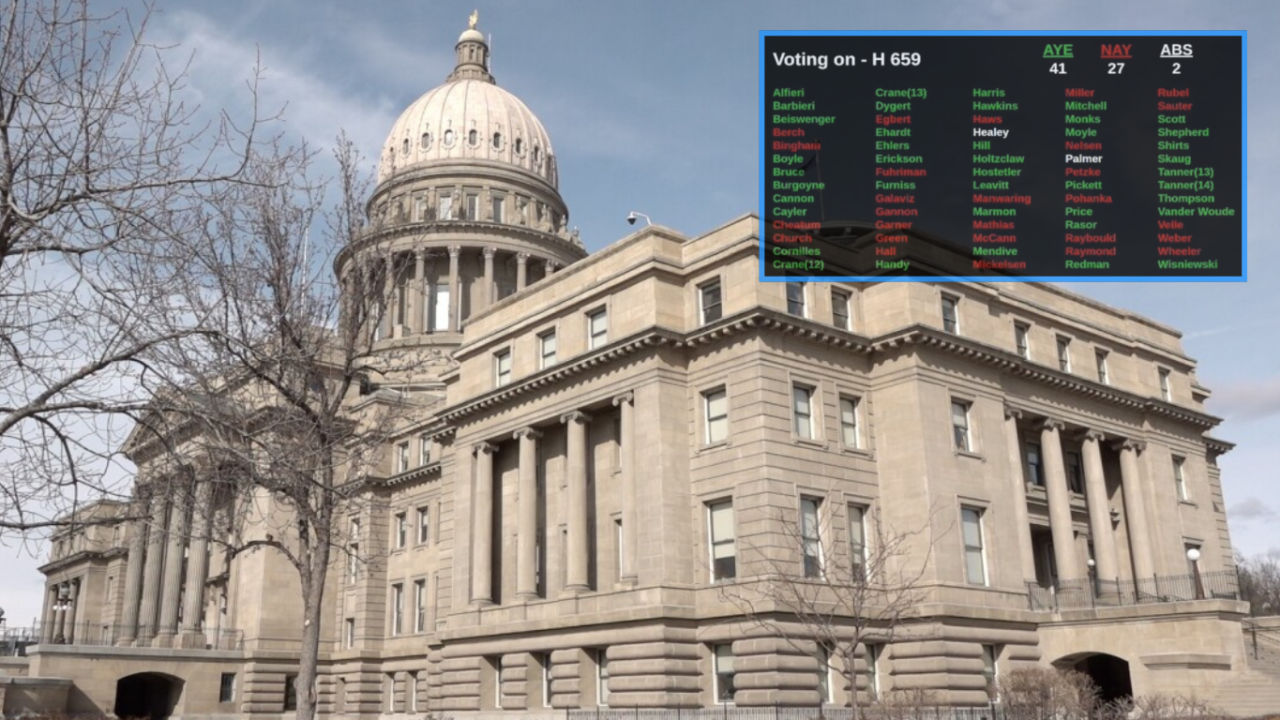

BOISE, Idaho — The Idaho House voted 41–27 on Friday to pass a measure requiring local law enforcement agencies across the state to apply for cooperation agreements with U.S. Immigration and Customs Enforcement.
House Bill 659 would require municipal police departments and county sheriff’s offices in Idaho to apply for a partnership with ICE through what is known as the 287(g) program. The program allows specially trained local officers to assist with certain federal immigration enforcement tasks under ICE supervision.
Under the proposal, agencies would need to apply for eligible programs, including models focused on identifying people in local jails who may be in the country unlawfully and coordinating with federal officials for potential detention or deportation. If any Idaho department cannot enter into an agreement, it would be required to publicly explain why.
Rep. Dale Hawkins, who sponsored the bill, said the measure responds to growing public concern about immigration enforcement and would create a more consistent approach across Idaho.
“We don’t want a checkerboard of one county doing it... and another doesn’t,” Hawkins told lawmakers during floor debate. "This will bring uniformity to our state."
Supporters argued the bill focuses primarily on cooperation with ICE when individuals are already in custody in local jails, rather than requiring local officers to conduct immigration raids.
Opponents raised concerns that the proposal could impose new burdens on local law enforcement agencies.
Rep. Lori McCann brought up that some agencies already cooperate with ICE voluntarily by sharing jail information and coordinating on cases. She argued that requiring formal participation would simply create additional burdens for law enforcement.
Several lawmakers also warned the measure could function as an unfunded mandate, noting that smaller counties may struggle to send deputies for training or cover staffing gaps while officers are away.
"Why would we force that on our sheriffs?" McCann questioned during debate. "Their departments are already underfunded, and they can't afford to do this."
Supporters disputed those concerns, saying federal programs provide reimbursements for training, equipment and detention costs.
The bill includes an emergency clause and would take effect July 1, 2026, if approved by the Senate and signed by the governor.
This story has been, in part, converted to this platform with the assistance of AI. Our editorial team verifies all reporting on all platforms for fairness and accuracy.
