

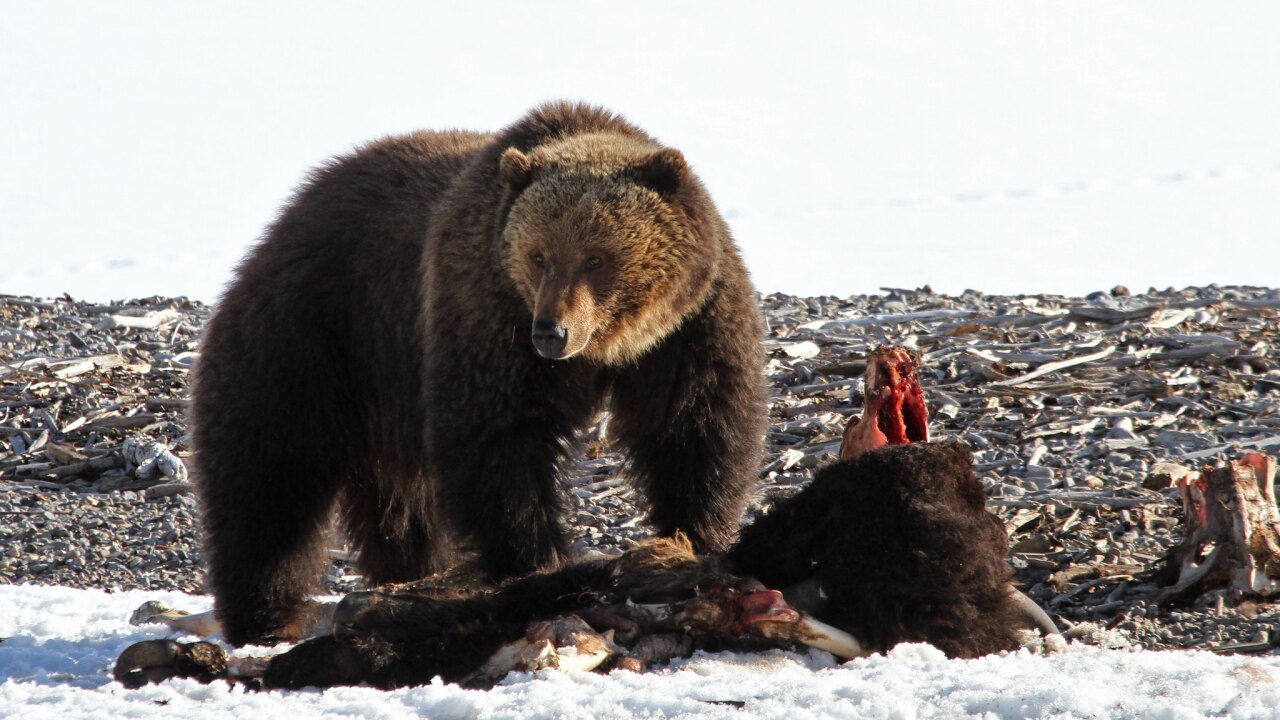

MAMMOTH HOT SPRINGS, Wyoming — On March 9, Yellowstone biologists reported the first grizzly bear sighting of the spring season, signaling the end of winter hibernation. As the seasons change and Yellowstone prepares to open the West Entrance in April, the National Park Service is reminding visitors that all of Yellowstone is grizzly and black bear country.
The biologist group was working in the backcountry of the northern part of the park when they spotted the bear scavenging a bull bison carcass.
"When bears emerge from hibernation, they look for food and often feed on elk and bison that died over the winter," states the NPS in a news release. "Bears may react aggressively to encounters with people when feeding on carcasses."
Male grizzlies typically come out of hibernation in early March, while females with cubs emerge in April and early May. In 2025, the first reported grizzly bear sighting happened on March 14th.
The NPS has provided the following guidelines to protect yourself and Yellowstone's bear population:
- Prepare for a bear encounter by carrying bear spray, knowing how to use it and making sure it’s accessible.
- Stay alert.
- Hike or ski in groups of three or more, stay on maintained trails and make noise. Avoid hiking at dusk, dawn or at night.
- Do not run if you encounter a bear. Stay 100 yards (91 m) away from black and grizzly bears. Approaching bears within 100 yards is prohibited. Use binoculars, a telescope or telephoto lens to get a closer look.
- Store food, garbage, barbecue grills and other attractants in hard-sided vehicles or bear-proof food storage boxes.
- Report bear sightings and encounters to a park ranger immediately.
- Learn more about bear safety.
WATCH: Experience a day of wildlife viewing at Yellowstone National Park
Local News 8 Report by Seth Ratliff
