


IDAHO FALLS, Idaho — This story originally appeared on East Idaho News.
As spud harvest gets underway in eastern Idaho, many farmers are expecting to have lower yields than last year.
Earlier this year, North American Potato Market News estimated a 5% decline in potato acreage. It showed a decrease from 315,000 acres in 2025 to 300,000 acres in 2026. University of Idaho agricultural economist Patrick Hatzenbuehler tells EastIdahoNews.com the acreage reduction is a result of the water shortage.
“Many farmers just didn’t plant (potatoes), or they planted a different crop that would require less water,” Hatzenbuehler says.
RELATED | Idaho declares drought emergency for all 44 counties as snowpack hits record lows
In April, the Idaho Department of Water Resources issued a statewide drought declaration. One of the worst water years on record has forced irrigators to make significant cutbacks.
Hatzenbuehler says unusually hot conditions this summer are another factor impacting potato yields.
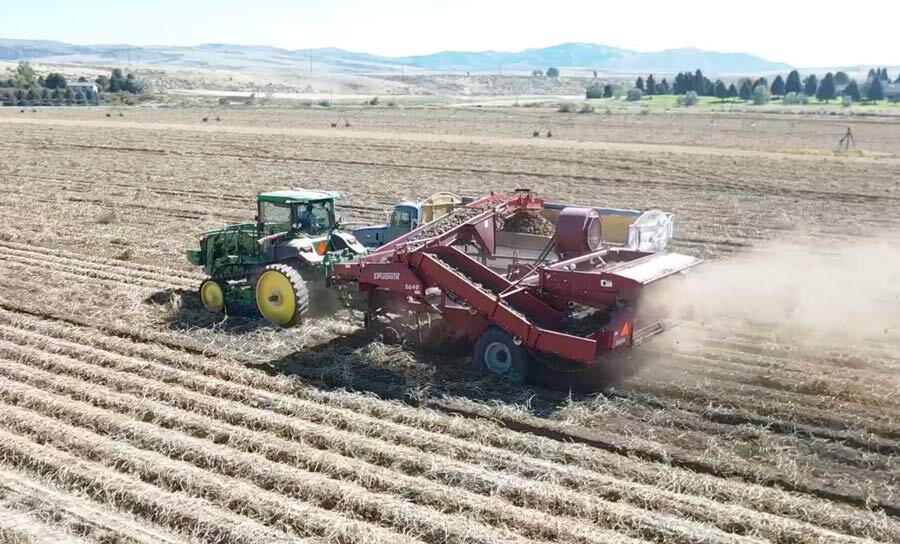
Randy Hardy, 73, of Oakley, began harvesting his fresh pack spud crop last week. He planted about 600 acres on his 2,600-acre farm this year. He pumps irrigation water out of the Lower Goose Creek Reservoir each year and was forced to heavily manage his water use. He says he only used 44% of his water rights this growing season and cut about 320 acres from planting.
“When I’ve got enough surface water, I don’t use my groundwater wells. This year, they ran continuously, which is not good for the aquifer, but we had to,” says Hardy.
Overall, he’s anticipating a 5-10% decline in yields, which is also impacting size.
“The size of the potatoes is down,” Hardy says. “That July-August heat was just brutal. We were (at temperatures) of 90+ for probably six straight weeks. You throw in the smoke from Oregon, and that made it worse.”
Under the circumstances, Hardy says he’s grateful to have a crop, even if the yield and quality are below average.
Ritchey Toevs, 74, of Aberdeen, expresses a similar sentiment. He planted about 1,200 acres of potatoes this year. Spud harvest got underway on Sept. 10, and he says spuds are undersized and the overall yield is down about 20% from last year.
Toevs says he finished the season with enough water, but fall irrigation was significantly reduced.
“We’re not going to have much water left in our bucket for 2027,” Toevs says. “We’re going to have to work out some different plans for next year. We’ll probably leave our lowest value crop, wheat, unplanted.”
When spud harvest wraps up next month, Hardy’s potatoes will be sold to Sun Valley Potatoes in Rupert and eventually be shipped to food service companies and retailers across the country. Toevs’ crops will be sold to Lamb Weston in American Falls to make French fries, tater tots, hashbrowns and other frozen products.
Looking ahead
While Hardy remains optimistic for next year, he says the pending El Niño “scares the crap out of me” because there’s a 50/50 chance of being a wet or dry winter. Without a good snowpack in 2026, Hardy says “we’re in real trouble.”
“Our reservoir here is not big, and it’s privately-owned,” says Hardy, who is a member of the Oakley Canal Company, which owns and operates it. “It was built in the 1910s and irrigates about 12,000 acres here. It’s next to empty now. We’re going to drain it to do some work on the gates. We’re going to have nothing going into the winter.”
RELATED | Idaho’s reservoirs hit historic low as winter outlook raises more water worries
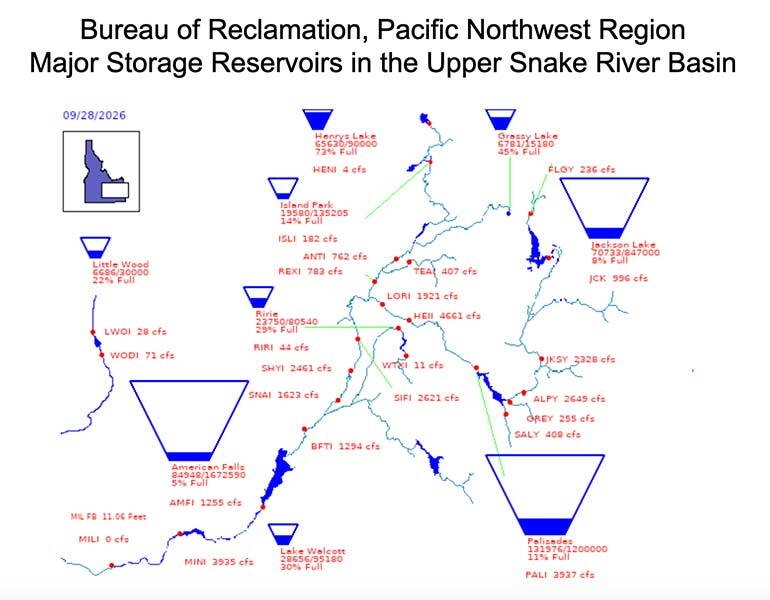
As of Monday, the U.S. Bureau of Reclamation is reporting that major storage reservoirs in the Upper Snake River basin are at an all-time low.
Historically, Toevs says winters in El Niño years have brought lots of moisture, so he’s hopeful about snowpack.
Amid the water shortage, Hatzenbuehler says rising diesel costs during harvest season reduce market gains.
Still, he says potato prices are on the rise, and farmers should feel hopeful for next year.
“Producers who are able to get good quality potatoes and store them well should feel pretty good heading into harvest about how things are looking from a business perspective,” he says.
