

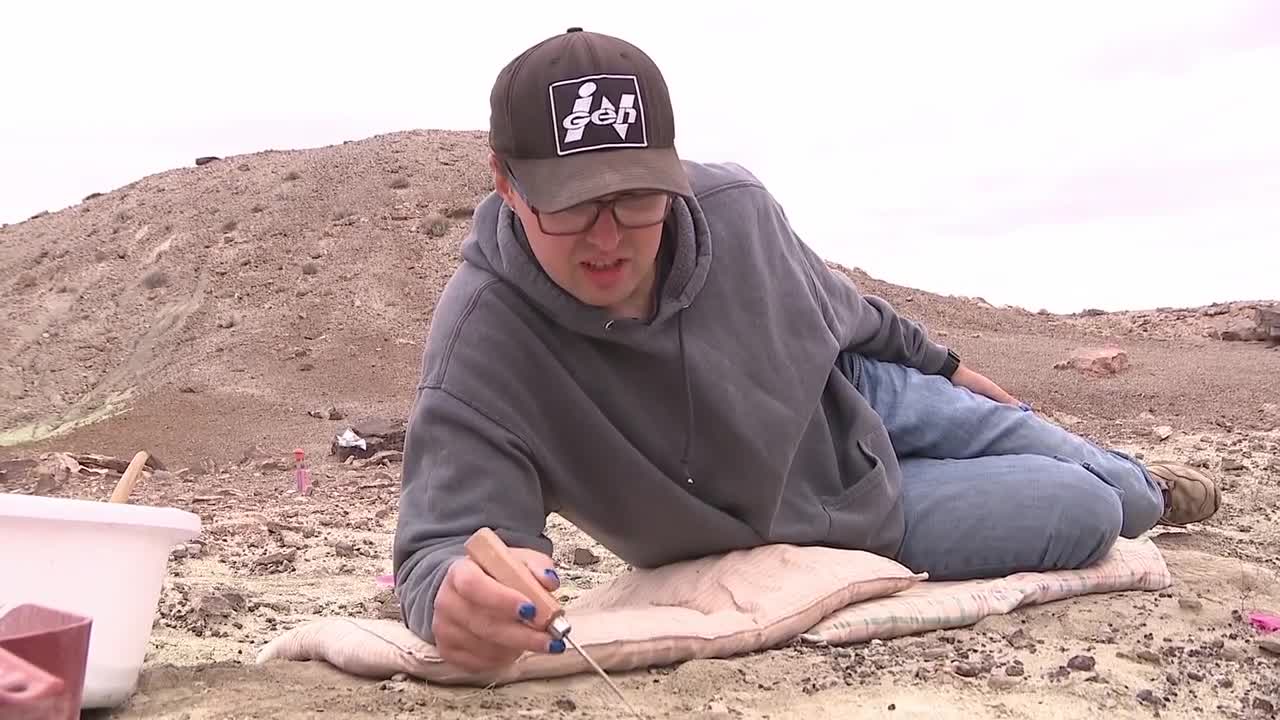


MOAB, Utah — Paleontologists are working carefully to unearth ancient dinosaur fossils in southeastern Utah, but they're already liking what they're finding.
"I think we’ve added up like four different kinds of dinosaur here right now," Utah State University Paleontologist Jim Kirkland told FOX 13 News on Monday.
WATCH | Fox 13 News reporter Ben Winslow talks with Kirkland and his fellow paleontologists—
The site, in a remote part of desert near Moab, is unique because it may be the scene of a mass extinction event. Paleontologists also believe they are discovering some entirely new species of dinosaur.
"Just near the base of the hill behind us and in the lower slope over there is the Jurassic-Cretaceous boundary. And at the end of the Jurassic, all of our famous dinosaurs went extinct," Kirkland said. "And here we’re looking at what the recovery looks like."
The site was discovered by assistant Utah State Paleontologist Don DeBlieux, who was hiking in the area.
"I wandered over here and found an Ankylosaurus humorous and scapula eroding out of these green rocks here," he told FOX 13 News.

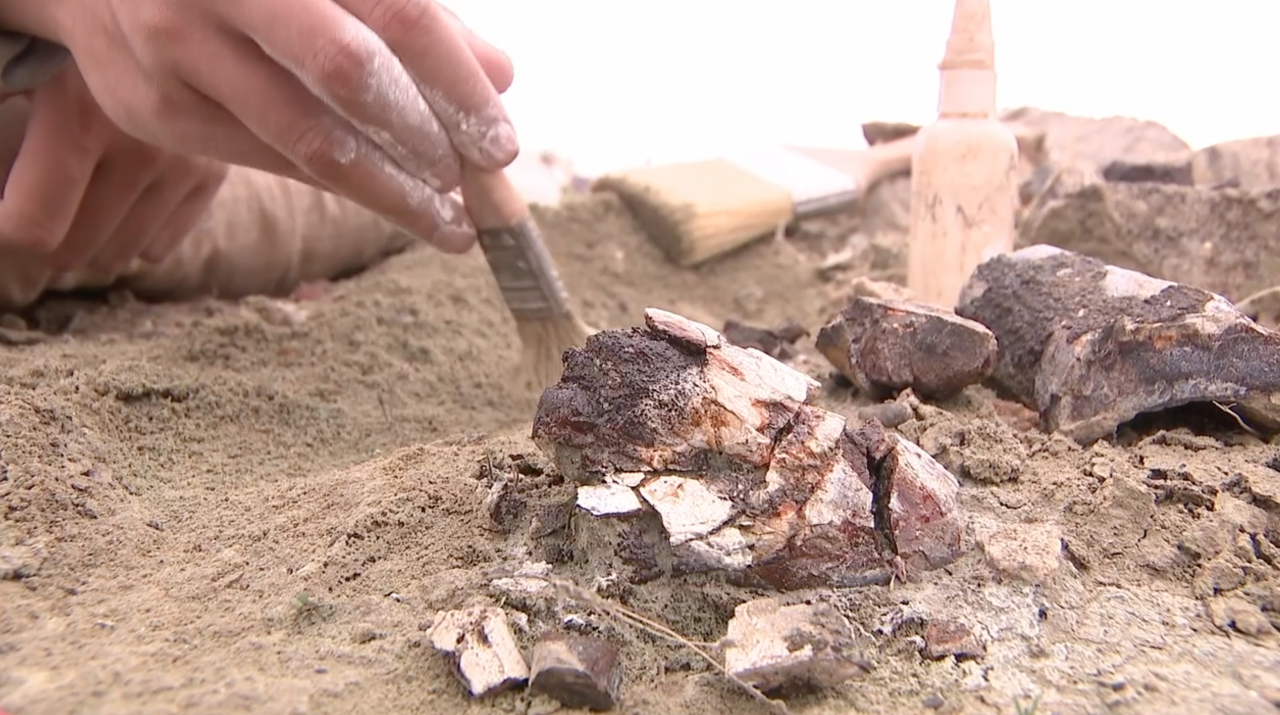
Since then, work has been done to carefully extract the fossils and determine what happened. Kirkland has a theory that an asteroid hit in what is now known as the Pacific Ocean and wiped out the dinosaurs of the Jurassic period. What emerged is buried here and some of it is like nothing else on the planet.
"We know that everything we find here is going to be brand new to science," DeBlieux said.
Utah's Department of Natural Resources conducts a lot of paleontological work in the Moab area. It's famously where the "Utahraptor" was discovered (the velociraptors in the "Jurassic Park" movies were modeled after them). Kirkland said he plans to name a dinosaur discovery after some who have worked on these dig sites — including one who is close to retirement.
"We’re naming cross pelta deblieuxae after Don DeBlieux, because Don has put up with me for 20 years," Kirkland said. "He’s earned a dinosaur."
The dinosaur, Kirkland said, is armored and spiny and considered one of the earliest of the Cretaceous Ankylosaurs.
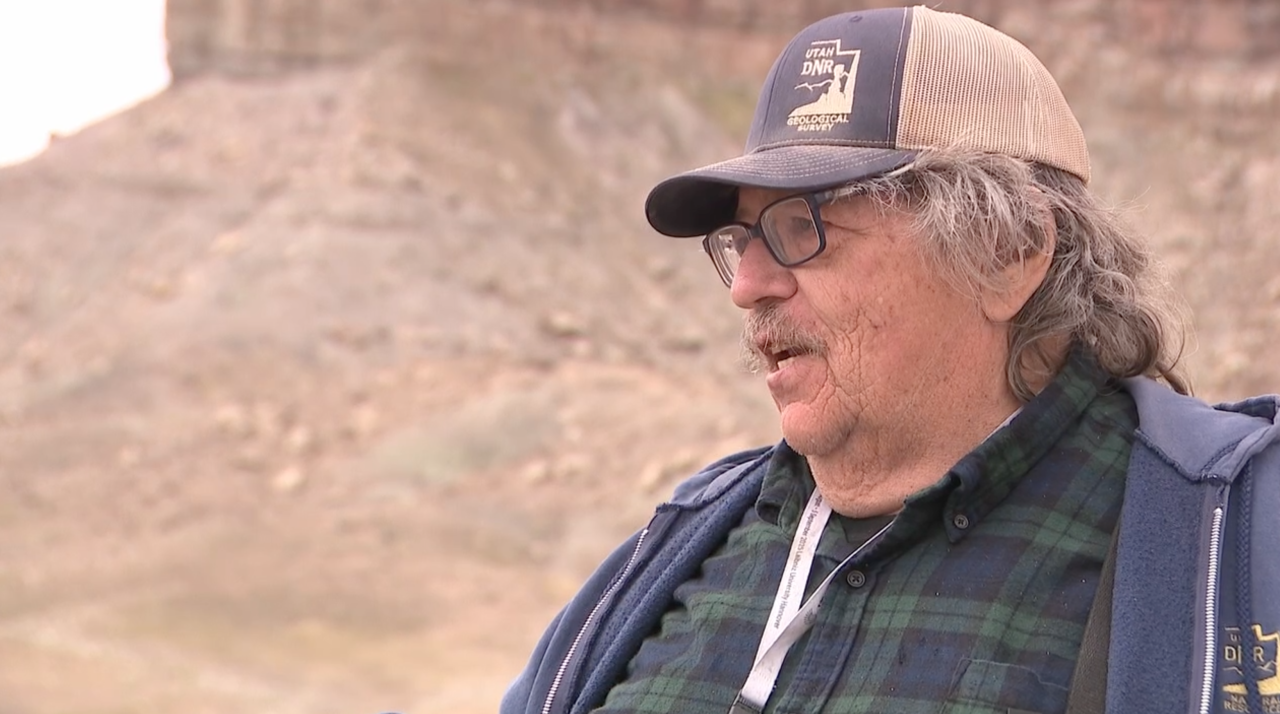
DeBlieux was humble about the honor, which is still in the process of scientific confirmation.
"I don’t really do it for the credit like that or even the money necessarily, it’s just a really great way of life to come out here," he said of his work as a paleontologist.
Digging through soil and rock to find fossils can help give people today an understanding of the world, DeBlieux said.
"You think about the animals that were here. To think this was a completely different environment and that there were these massive dinosaurs and little dinosaurs and birds flying around. It’s just a really neat story," he said. "It’s important, scientifically important, to tell us where we came from and maybe where we’re going, you know about climates of the past, climate change, those things. I also think people are just interested in it."
